CATIE promotes fire governance in Latin America
- Through the LAMFN, governance processes are promoted to strengthen intersectoral territorial decision-making systems and to organize the study and understanding of the causes of major fires.
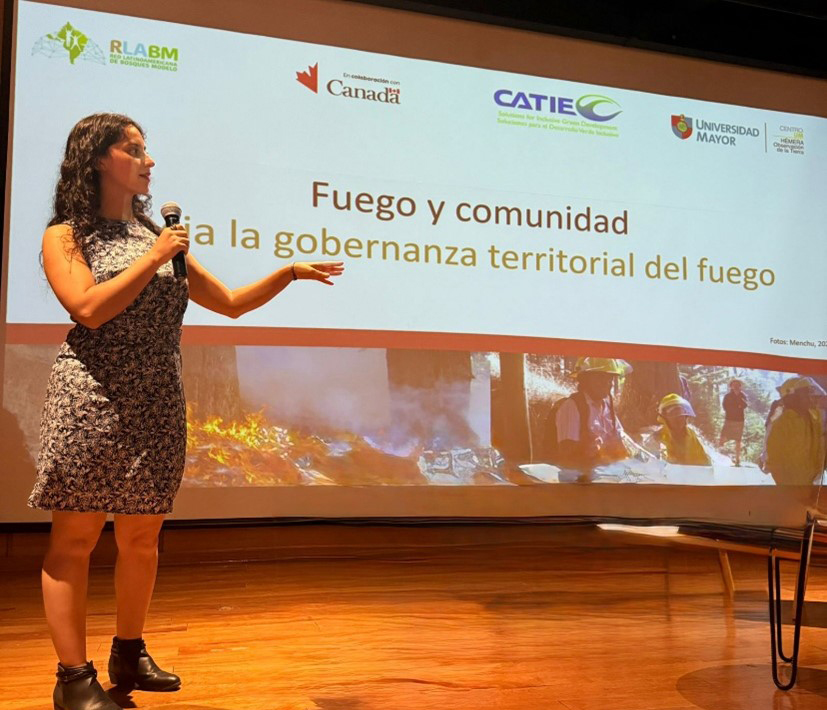
CATIE’s Climate Action Unit, through the Latin American Model Forest Network (LAMFN), and in coordination with the Universidad Mayor of Chile, Chile’s National Forest Corporation (CONAF), the World Resources Institute, EcoAgriculture Partners (EAP), and other LAMFN partners, organized the symposium titled “Fire and Community, Towards Territorial Fire Governance.”
This event took place on Monday, November 24, at the Universidad Mayor facilities in Santiago, Chile, as part of the activities of the XXXIV LAMFN Board of Directors meeting.
Representatives from institutions such as FAO, CIFOR, WRI, EAP, the Embassy of Canada, governments of some of the 15 countries that make up the LAMFN, and some of its 32 territorial governance platforms in Latin America, as well as faculty and students from the university, were present.
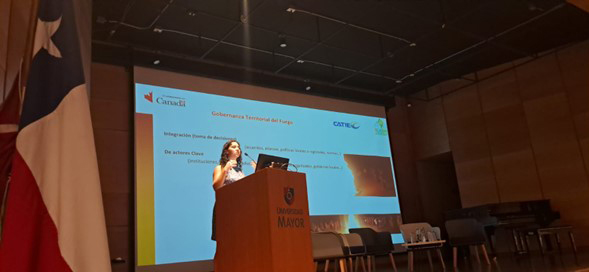
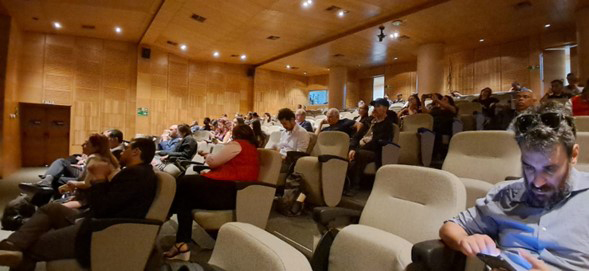
Promoting governance in vulnerable territories
The LAMFN is promoting the development of fire governance processes, which refer to the establishment of intersectoral territorial decision-making systems and the organization of efforts to study and understand the processes that generate large territorial fires. These fires have been increasing in magnitude and impact in the context of climate change.
Likewise, fire governance includes the strengthening of local strategies for education and capacity building and, above all, strategies for fire prevention, proper response, and impact mitigation, as well as the technical definition of post-fire actions. This was explained by Roger Villalobos, researcher at CATIE’s Climate Action Unit and chair of the LAMFN Board of Directors.
Voices and strategies to address wildfire risk
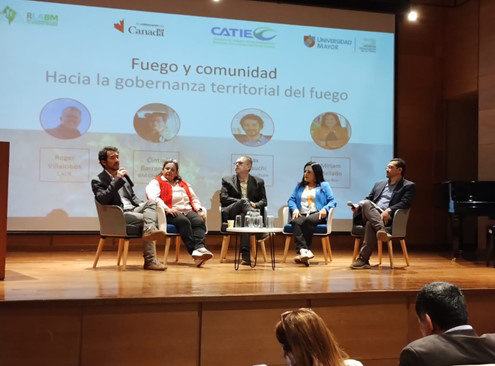
During the symposium, examples were presented on the vision of the International Model Forest Network and the Government of Canada regarding the international challenges posed by the increase in wildfires, CONAF’s approach in Chile, LAMFN’s approach (presented by Ireana Lara from the Climate Action Unit), and successful comprehensive fire management experiences from some of the governance platforms in Latin America that are part of the LAMFN. In addition, a discussion panel was held on the challenges that this network is addressing for the establishment of these climate adaptation processes.
“Fire governance requires networks of trust among actors in fire-prone territories; that is the foundation of the process we are building in eastern Bolivia,” stated Jenny Ordoñez, manager of the Sustainable Chiquitanía Model Forest initiative in Bolivia and staff member of the Foundation for the Conservation of the Chiquitano Dry Forest.
“The coordination of actions between highly organized communities for fire prevention and national environmental management institutions is a key factor in avoiding the major environmental and economic losses that fires can generate,” said Erick Cuellar, manager of the Selva Maya Model Forest initiative in Guatemala and staff member of the Association of Forest Communities of Petén in that country.
More information:
Róger Villalobos
Chair, LAMFN Board of Directors
Researcher
Climate Action Unit
CATIE
rvillalo@catie.ac.cr
Written by:
Esteban Rodríguez Zamora
Communicator
Information Technology and Communication
CATIE
esteban.rodriguez@catie.ac.cr