CATIE promotes participatory management of forest landscapes in Latin America
- With CATIE’s leadership, the Latin American Model Forest Network advanced new alliances, strengthened participatory governance, and consolidated actions in gender equity, youth leadership, fire management, and restoration during a week of technical and community work in Chile.
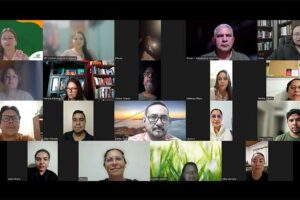
From November 24 to 28, 2025, the XXXIV Meeting of the Board of Directors of the Latin American Model Forest Network (RLABM) was held in Panguipulli, Chile, a territory in which the Panguipulli Model Forest initiative operates, one of the 32 territorial governance platforms that make up the RLABM.
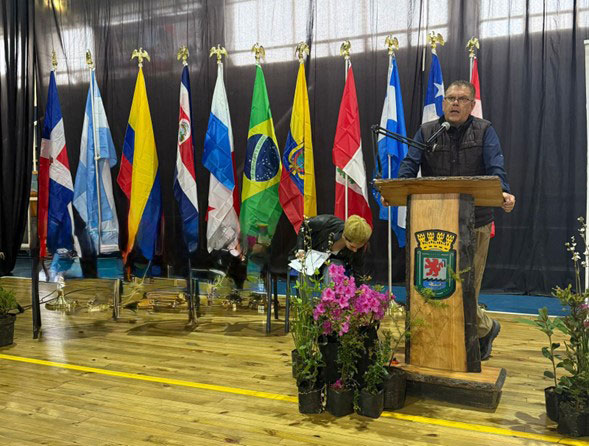
Model Forests are voluntary agreements for collaboration and intersectoral governance in support of the sustainable development of large territories or landscapes, where the forest is an essential element.
These processes involve representatives from various economic and social sectors with interests in the territory, such as national institutions, local governments, non-governmental organizations, private companies, or productive groups, who develop alliances and agreements to promote better management of natural resources.
Consolidation of alliances
The RLABM Board of Directors, which meets annually, includes representatives from institutions in the 16 countries that are part of the Network, and from the Model Forests in those countries, who review their main lines of work and opportunities for international collaboration. This board is chaired by Róger Villalobos, representative of CATIE, the institution that hosts the RLABM management within its Climate Action Unit, led by Fernando Carrera. The vice presidency is held by the 20x20 restoration initiative for Latin America, represented by Natalia Ruiz Guevara.
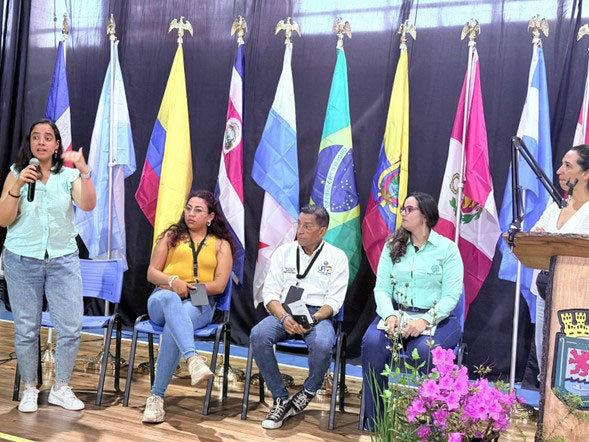
This meeting also included collaborating partners from Natural Resources Canada, home of the International Model Forest Network Secretariat, CIFOR-ICRAF, FAO, EcoAgriculture Partners, and IUCN. During the board meeting, the incorporation of Panama as the 16th country in the network was approved, following a request by Panama’s Ministry of Environment. Updates were also shared on the progress of working groups on Gender Equity, Restoration, Fire Governance, Forest Schools, Climate Change, and the consolidation of the Model Forest Youth Network.
During the week, in addition to the board meeting, participants also joined the symposium titled “Fire and Community, Toward Territorial Fire Governance,” organized by the RLABM with support from Universidad Mayor de Chile and the National Forestry Council of Chile, held in Santiago.
Workshop on collaborative governance
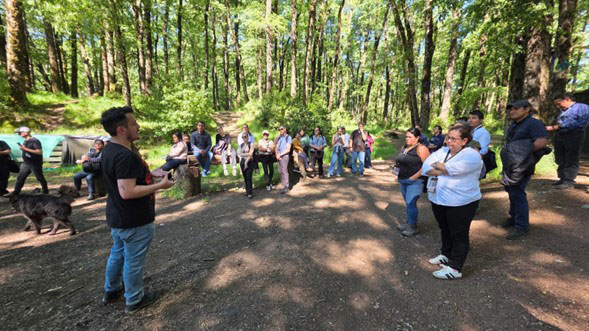
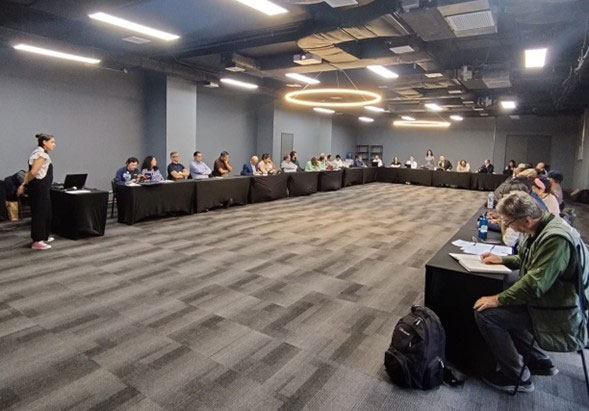
Once in the territory of Panguipulli, the international workshop “Collaborative Governance in Biocultural Territories” was held, facilitated by the organizations managing the Panguipulli Model Forest, including the local mayor.
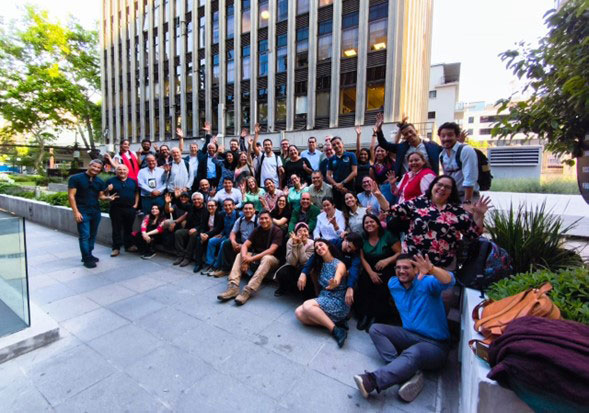
This was a week of great learning and strengthening of efforts for the management of sustainable and culturally diverse territories, stated Mr. Pedro Cardin, president of the Panguipulli Model Forest. “We have drawn inspiration from the community knowledge of the Mapuche communities of this region to envision governance based on the diverse interests and power structures within each territory, with a vision of progress and innovation for sustainable development that meets people’s needs,” said Graciela Salazar, leader of the Tucumán Model Forest initiative in Argentina.
Simón Torres and Ireana Lara, who support the RLABM from CATIE’s Climate Action Unit, expressed their satisfaction at witnessing progress in actions that contribute to gender equity within the Network’s processes, as well as the participation of young leaders in key areas of work such as integrated fire management and ecological restoration of landscapes.
More information/written by:
Róger Villalobos
Chair, LAMFN Board of Directors
Researcher
Climate Action Unit
CATIE
rvillalo@catie.ac.cr
Edición:
Esteban Rodríguez Zamora
Communicator
Information Technology and Communication
CATIE
esteban.rodriguez@catie.ac.cr