CATIE strengthens capacities for inclusive climate adaptation in Kusapín, Panama
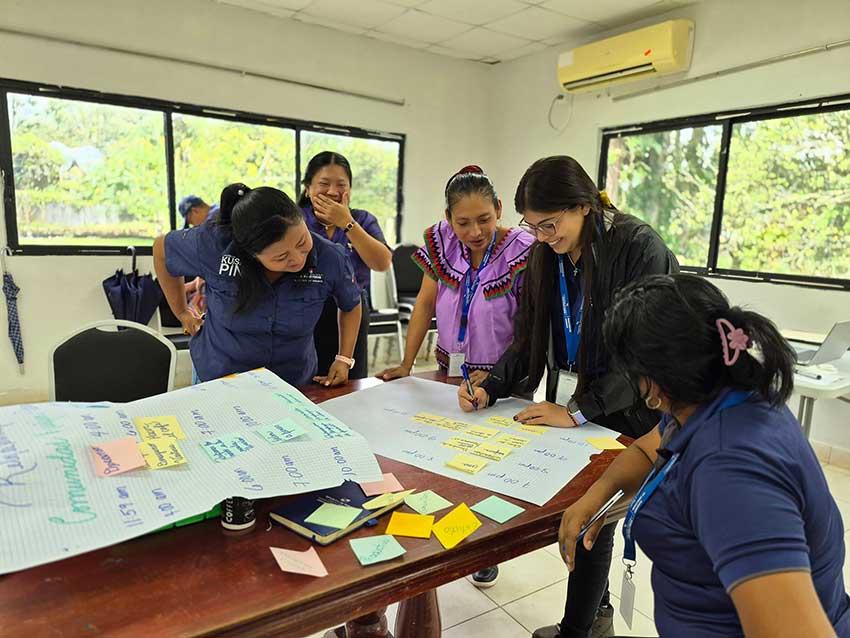

- Trainings incorporate interculturality and intersectionality approaches as key axes for designing nature-based solutions together with Indigenous communities of the Ngäbe Buglé Comarca.
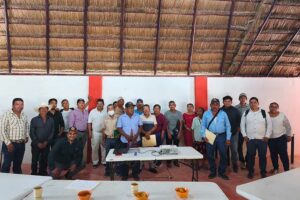
Within the framework of the project “Improving adaptive capacity to climate change in the district of Kusapín through nature-based solutions and community processes” (Kusapín se adapta), CATIE (Tropical Agricultural Research and Higher Education Center) carried out a training program on January 6 and 7, 2026, aimed at strengthening the capacities of technical staff and decision-makers to promote climate change adaptation processes with an inclusive and intercultural approach.
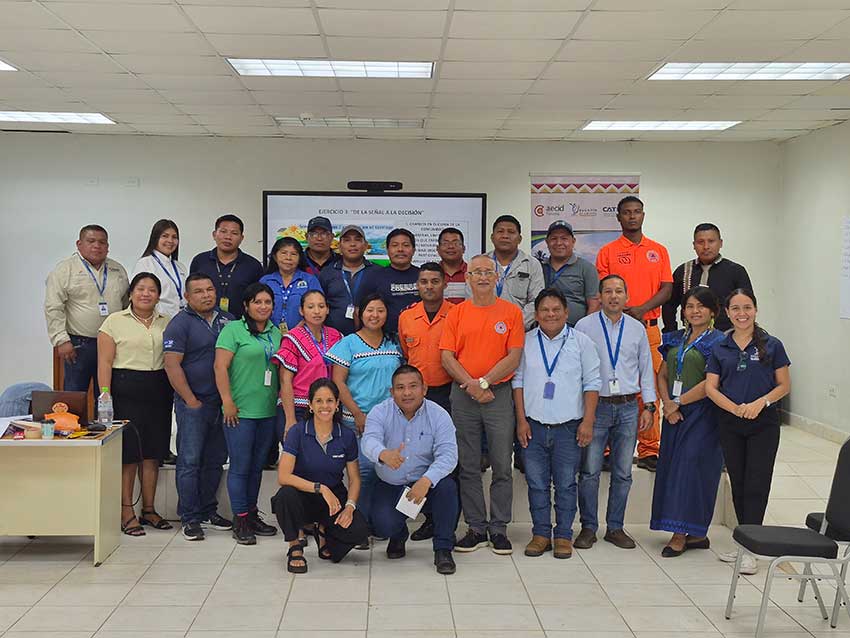
The activity took place at the facilities of the National Institute for Professional Training and Human Development Capacity Building (INADHE) in Punta Peña, district of Chiriquí Grande, province of Bocas del Toro, and was attended by 23 representatives from key institutions of the Ngäbe Buglé Comarca, including the Ministry of Environment (MiAMBIENTE), the Ministry of Agricultural Development (MIDA), the Ministry of Health (MINSA), the Ministry of Education (MEDUCA), the National Civil Protection System (SINAPROC), and the Municipality of Kusapín.


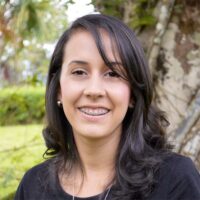
The training was facilitated by Karina Poveda Coto, coordinator of CATIE’s Rural Development and Indigenous Communities Unit, who addressed strategic topics such as interculturality, intersectionality, and a gender approach, integrating them as practical tools for the design and implementation of community-based climate change adaptation processes.
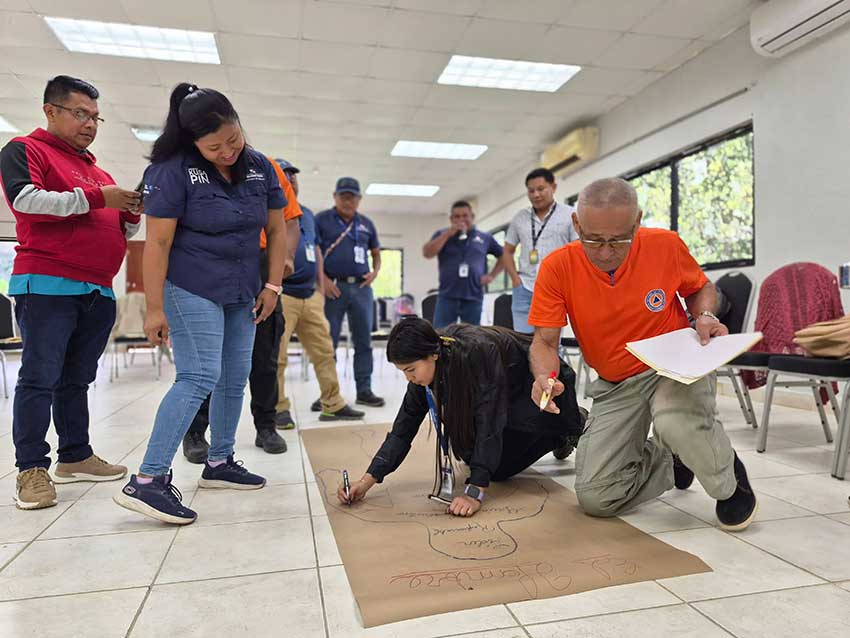
During the sessions, participants not only strengthened their technical knowledge, but also exchanged experiences and reflections aimed at improving territorial climate management from a perspective that recognizes the cultural, social, and gender diversity present in the territories.
For Johana Ellington, park ranger of the Palo Seco Protected Forest of MiAMBIENTE in the Ngäbe Buglé Comarca, these types of spaces are fundamental: “It is not easy to stand in front of different people, using different strategies and methodologies. These trainings allow us to learn so that we can then teach and practice inclusive education, not only in communities, but also in households,” she stated.
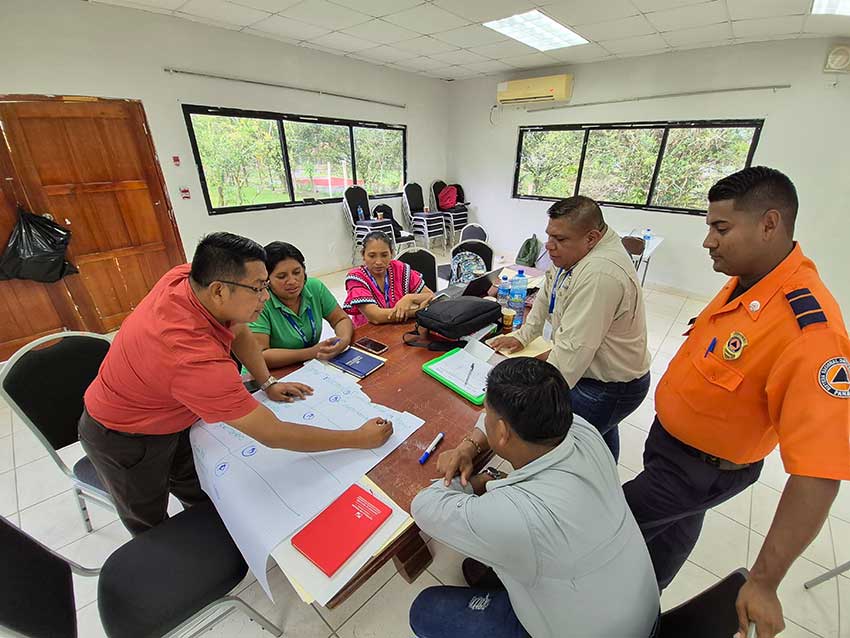
Along the same lines, Nataly Alvares, from the Climate Change Section of MiAMBIENTE in the comarca, highlighted the workshop’s didactic approach: “It was a very understandable training, both technically and practically. I learned concepts that we previously generalized, such as the difference between gender and sex.”.
From the local level, Dalila Jaén, secretary of the Municipality of Kusapín, emphasized the value of the process for her future work: “For me, as someone who is just starting in my role, this experience was very important. It will allow me to relate better with communities and to grow both professionally and personally.”.
For his part, the regional director of MiAMBIENTE in the Ngäbe Buglé Comarca, Valerio Gómez, described the training as a highly relevant process for institutional and territorial work: “The training was a complete success, with well-defined objectives and very clear content. I thank the CATIE team because they addressed topics where there were significant gaps. These types of spaces are what should be offered to both public officials and traditional authorities, as they allow us to better understand our daily work from a new perspective. These are very valuable learnings that strengthen our work in the territory,”he affirmed.
Finally, Liann Muñoz, project coordinator from CATIE, highlighted that these joint working spaces not only update technical knowledge, but also promote valuable exchanges and strengthen inter-institutional coordination, generating concrete actions that contribute to improving climate management in the territory.
These actions are part of the Kusapín se adapta project, funded by the Spanish Agency for International Development Cooperation (AECID), implemented by CATIE and developed in coordination with MiAMBIENTE, through its Climate Change Directorate and the Ngäbe Buglé Comarca Regional Office.
The initiative seeks to contribute to sustainable human development and to the adaptive capacity of the coastal district of Kusapín, one of the most vulnerable areas in the country to climate change.
More information:
Elvin Britton
CATIE Panama Representative
ebritton@catie.ac.cr
Karina Poveda Coto
Coordinator, Rural Development and Indigenous Communities Unit
CATIE
karina.poveda@catie.ac.cr
Written by:
Karla Salazar Leiva
Communicator
Communications and Marketing Office
CATIE
karla.salazar@catie.ac.cr
Tag:climate adaptation, género, inclusión, Kusapín, Panama