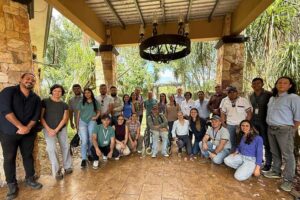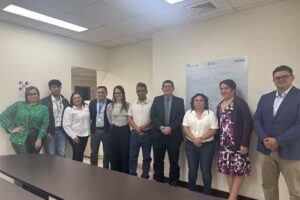
Mancomunidad of Güisayote launches the implementation of its Women’s Economic Empowerment Policy with support from ESCALAR
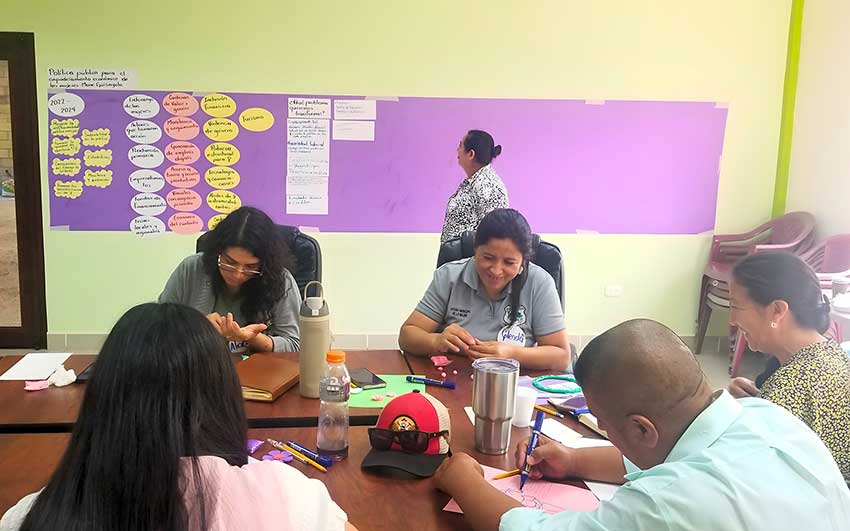
- The initiative will strengthen women’s economic autonomy and promote inclusive development in communities of Ocotepeque, Honduras, reducing inequalities in the face of climate change
The Mancomunidad of Güisayote in Honduras has initiated the operational implementation of its Women’s Economic Empowerment Policy, a territorial instrument approved in December 2025 that will define the 2026–2030 roadmap to strengthen income, employment, and economic autonomy in the territory.
In a country where 43.5% of women lack their own resources (ECLAC, 2019), less than 30% have access to land titling (OXFAM, 2021), and at least 70% live in poverty (EFE, 2022), compounded by constant exposure to extreme climate conditions, this instrument responds to the need to reduce structural gaps that limit their economic autonomy.
During 2026, the policy will begin with the integration of its strategic axes into municipal plans, gender-responsive budget prioritization, and support for women-led enterprises, incorporating climate adaptation, access to financing, and business strengthening.
The ESCALAR project: Scaling climate change adaptation solutions for resilience and migration reduction in the Central American Dry Corridor, led by CATIE (Tropical Agricultural Research and Higher Education Center) and funded by the Swedish Cooperation, facilitated the formulation of the instrument. Through technical assistance, capacity building, and participatory methodologies, it integrates approaches related to climate finance, agricultural innovation, and strengthening of rural enterprises.
A local policy with a comprehensive vision
The Women’s Economic Empowerment Policy serves as a guiding framework to coordinate actions between the Mancomunidad and the municipalities, through the Municipal Offices for Women (OMM), enabling more efficient management of public resources and greater institutional coordination. Its formulation involved the OMMs of Sensenti, Fraternidad, Lucerna, and Dolores Merendón, as well as the Ministry of Women (SEMUJER). This process included interviews, participatory workshops, and a validation process with representatives of municipal councils and the Mancomunidad’s technical team.
The instrument is already being used in the design and management of new projects, will initially benefit 1,000 women, and aims to reach up to 2,000 during the 2026–2030 period.
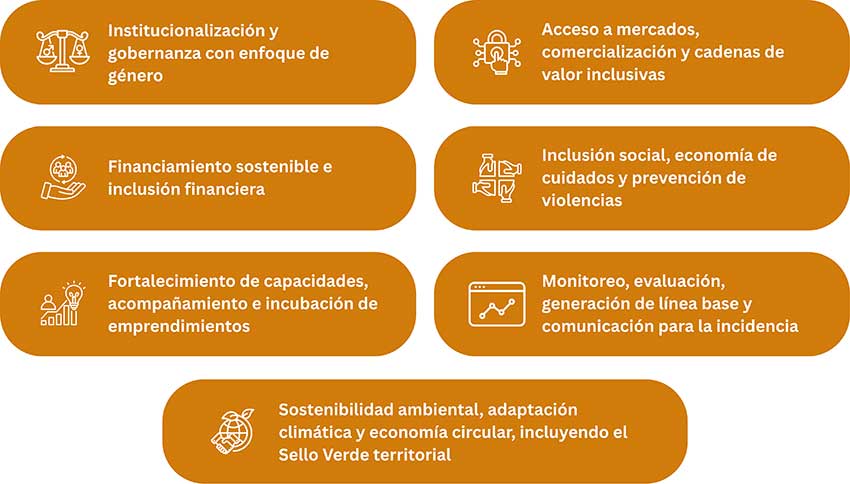
Strategic pillars
The policy is structured around seven strategic axes that guide its implementation:
A pathway to territorial sustainability
In the medium and long term, expected outcomes include strengthened economic and organizational capacities of women, greater access to productive resources, financing, technology, and markets, and municipal environments that are conducive to women-led enterprises.
With the completion of the ESCALAR project scheduled for 2026, the Mancomunidad will fully assume leadership of the implementation, incorporating the policy into municipal plans and promoting ordinances that ensure its institutional sustainability.
“Investing in women is not a social expense; it is a strategic decision to drive the economic development of the Güisayote region,” stated the presidency of the Mancomunidad of Güisayote. This approval marks progress toward gender equality in adverse climate contexts, with potential for replication in other areas of the Dry Corridor.
More information:
Favio Duarte
Adaptation Measures Specialist
favio.duarte@catie.ac.cr
Edición:
Karla Madrigal Pereira
Communicator
Communications and Marketing Office
CATIE
Karla.madrigal@catie.ac.cr