CATIE participates in the development of Costa Rica’s National Reforestation Plan
- The country aims to reforest 4,000 hectares per year to secure sustainable timber by 2050
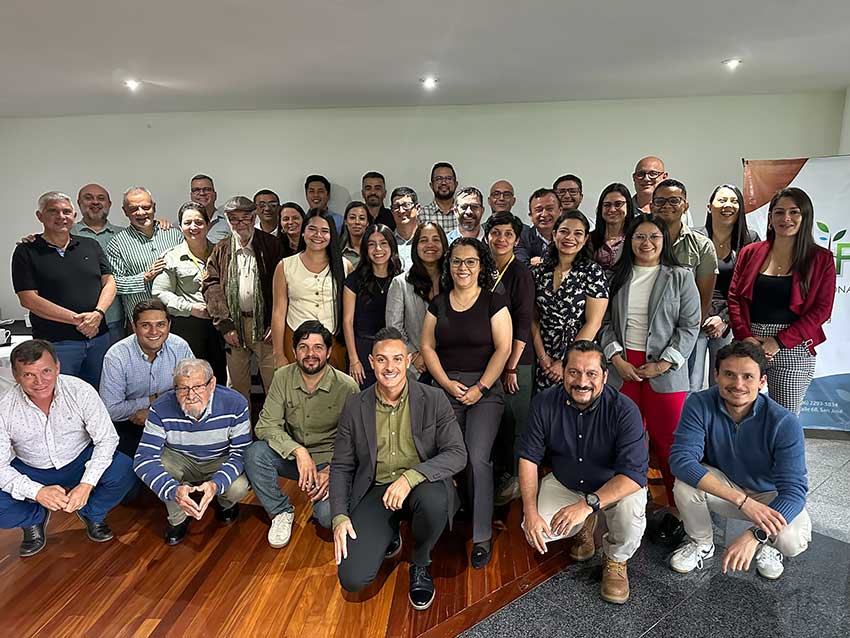
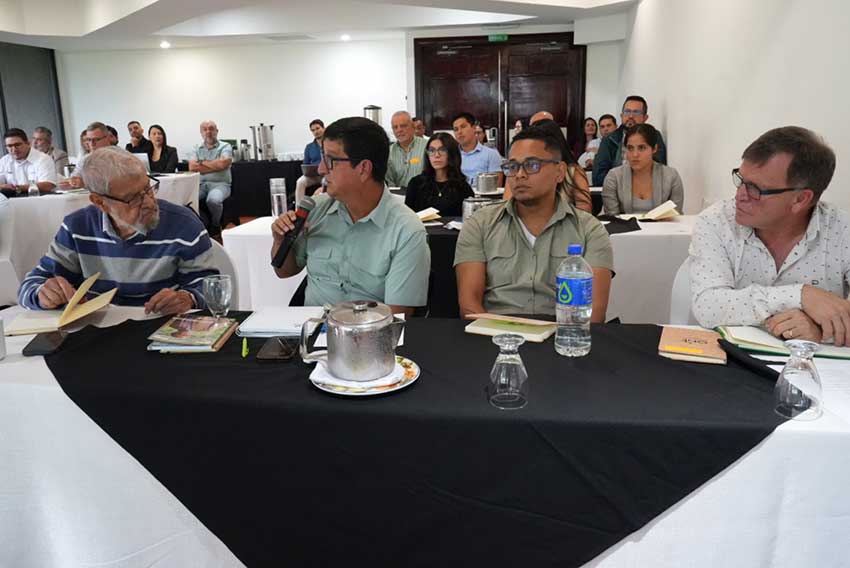
Costa Rica is taking a decisive step toward regaining its leadership in the forestry sector, and CATIE (Tropical Agricultural Research and Higher Education Center) had the honor of participating in the workshop for the development of the National Reforestation Plan for Timber Production to 2050, an initiative promoted by the National Forestry Office (ONF), FONAFIFO, the Costa Rica Institute of Technology (TEC), and the Luxembourg Development Cooperation Agency.
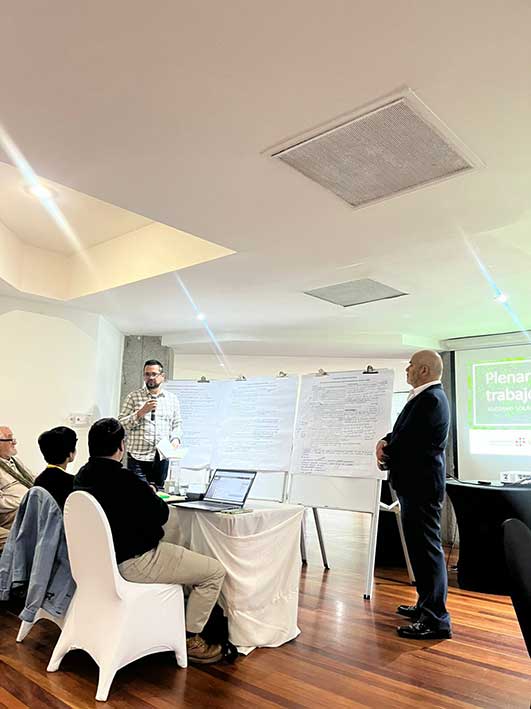
This plan responds to an urgent reality: for decades, the country stopped investing in productive reforestation, affecting the competitiveness of the sector and creating a historic timber deficit. Today, the proposal is clear: establish at least 4,000 hectares of plantations each year, promote business-oriented forestry, modernize the industry, strengthen traceability, and create new opportunities for rural producers, all under a profitable and sustainable approach aligned with the country’s climate challenges.
In this space, CATIE contributed particularly to a theme that the plan identifies as a fundamental pillar: knowledge management. The future of reforestation cannot rely solely on expanding the number of hectares; it requires science, training, updated information, silvicultural innovation, technical protocols, business models, and tools that empower producers, technicians, students, and decision-makers.
Representing CATIE, M.Sc. Marcella Sarti, researcher at the Forests and Biodiversity in Productive Landscapes Unit, and M.Sc. Luis Diego Jiménez, Head of the Seed Bank, took part in the event.
CATIE’s participation, through the Knowledge Management Commission, will contribute to strengthening the sector’s technical capacities, developing planning tools, generating scientific evidence, and promoting training and knowledge-transfer processes for producers, technicians, and institutions.
Furthermore, CATIE will contribute its experience in applied research, sustainable forest management, productive restoration, and agroforestry systems, helping to consolidate an integrated approach that harmonizes production, conservation, and rural development.
“Our participation reaffirms CATIE’s commitment to an innovative and competitive forestry sector grounded in scientific evidence. We firmly believe that a country that invests in trees invests in its future: in employment, rural development, national industry, climate solutions, and the well-being of its communities,” said Luis Diego Jiménez, Head of CATIE’s Forest Seed Bank.
CATIE will continue working alongside institutions, producers, and partners to ensure that reforestation once again becomes a driver of growth and a real opportunity for those who depend on forest plantations and other tree-based productive systems, as well as for those who support and promote their development.
Starting in January 2026, the Plan’s technical committees—including Knowledge Management, Markets, Financing, and Organization—will hold regular meetings with the organizing committee, composed of representatives from ONF and TEC, in order to follow up on the agreements reached and advance the gradual implementation of the strategic actions.
Additionally, each committee will conduct internal working sessions with its members to operationalize the defined guidelines, develop concrete proposals, and strengthen the interinstitutional coordination required to meet the goals of the National Reforestation Plan.
More information/written by:
Luis Diego Jiménez
Head, Forest Seed Bank
CATIE
djimenez@catie.ac.cr
Marcella Sarti
Researcher
Forests and Biodiversity in Productive Landscapes Unit
CATIE
Marcella.sarti@catie.ac.cr
Editada por:
Karla Madrigal Pereira
Communicator
Communications and Marketing Office
CATIE
karla.madrigal@catie.ac.cr