Advances of PARES in Ecuador Presented to the MAATE Subsecretariat for Climate Change
- Territorial results of the project strengthen dialogue with environmental authorities and provide key inputs for climate adaptation, water management, and the agroecological transition in the country
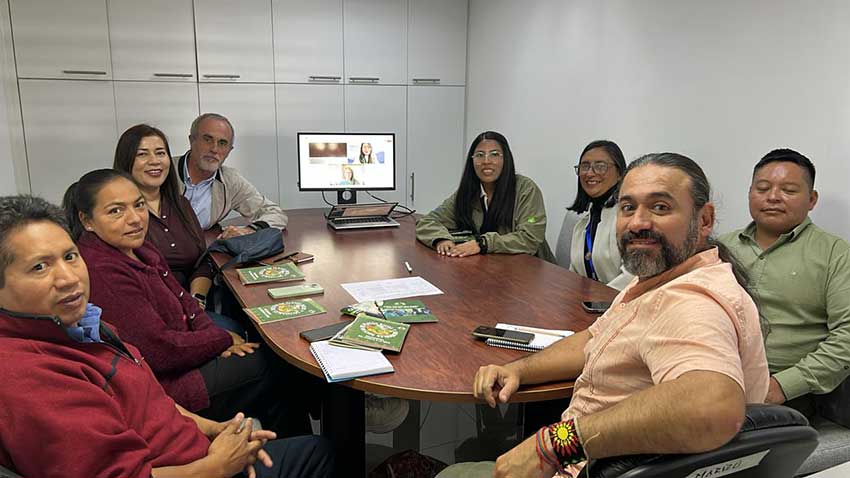
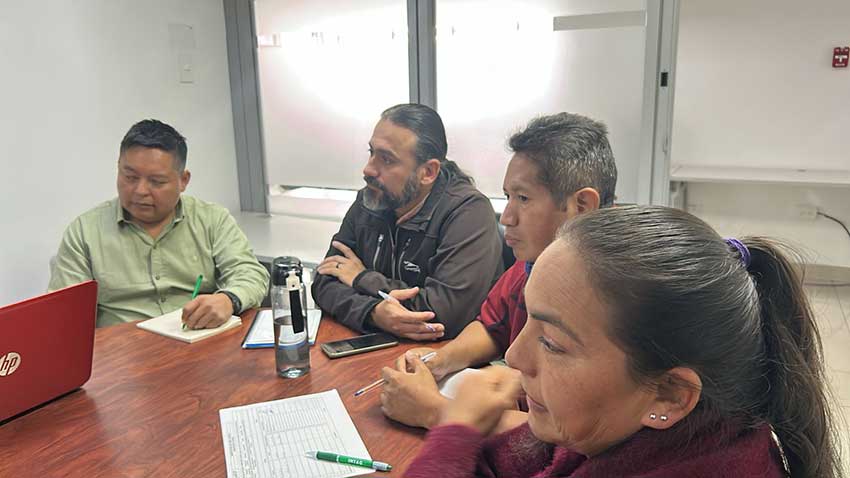
The advances and lessons learned from the Peace, Action, Resilience and Sustainability in Landscapes of Latin America Project (PARES) in Ecuador were presented to the Subsecretariat for Climate Change of the Ministry of Environment, Water and Ecological Transition (MAATE), during an official visit that enabled the sharing of preliminary results from the grants implemented in the territory and strengthened coordination between local initiatives and national priorities for climate change adaptation.
This initiative is developed within the framework of the Alliance “Facilitating targeted approaches to address climate- and environment-related risks to peace and security,” through which the European Union (EU) and the United Nations Environment Programme (UNEP) have joined efforts with CATIE (Tropical Agricultural Research and Higher Education Center) to implement PARES in Latin America.
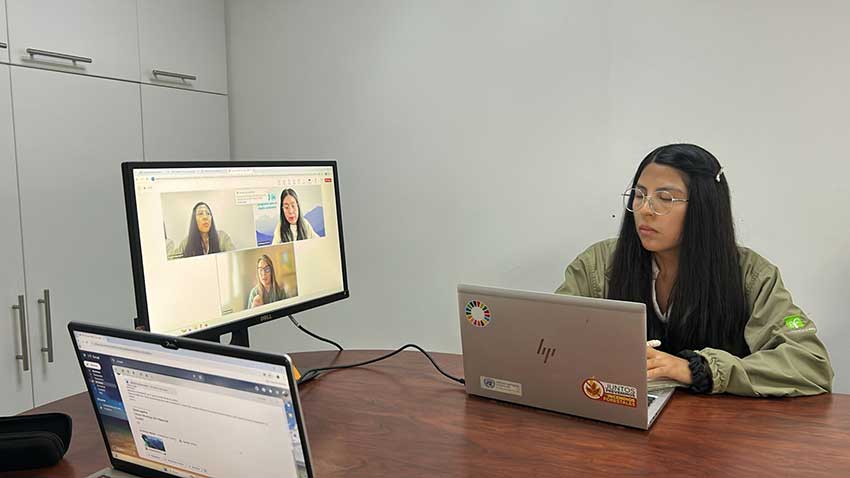
During the session, preliminary results and lessons learned from fieldwork carried out by partner organizations were shared, including actions aimed at strengthening climate resilience from a landscape approach, with emphasis on agroecological transitions, water resource management, and agroforestry systems, as well as on coordination among local actors, cooperation agencies, and the public sector.
Yessenia Alquinga, analyst at the MAATE Subsecretariat for Climate Change, highlighted the relevance of the process and its link to national priorities: “These types of actions contribute to the National Drought Plan process that MAATE is currently working on.” She also emphasized that the advances align with strategic areas for adaptation in the country: “The work you are doing is very important and is related to sectors that are key for adaptation in Ecuador,” she noted.
From the territory, Fundación Tierra Viva shared how PARES has made it possible to expand the scope of community work toward an integrated scale: “PARES has been a great project to deepen what we have been doing in the community. This moment has allowed us to scale up to the landscape level; we can move beyond the farm, and this is how agroecology is being addressed internationally.”
As part of this organizational leap in the Ambuquí landscape, progress was reported in restoration and the strengthening of local capacities: a Bokashi-type bioinputs workshop was promoted with broad community participation (including the production of 647 bags of compost, some of which were allocated to reforestation processes), and progress was made in planting native species for the restoration and protection of water recharge areas, coordinating efforts with water boards, educational institutions, and local governments.
For its part, Corporación Toisán (CT), another PARES partner organization, explained that the pilot is being implemented in five micro-watersheds and is based on its water governance and territorial organization model. Within this framework, progress is being made in identifying “agents of change” and in participatory planning of implementation to prioritize coherence and sustainability: “We want to move forward with a single process hand in hand with the community and the adaptation needs of the Intag Valley,” stated Angel Paúl Gualotuña Pastrano.
Entre los avances destacados se mencionaron procesos de formación en diseño hidrológico en finca, siembra y cosecha de agua, equipamiento para monitoreo y seguimiento de cobertura vegetal y captaciones de agua, así como el fortalecimiento del rol de juventudes en el monitoreo comunitario.
Among the key advances highlighted were training processes in on-farm hydrological design, water harvesting and storage, equipment for monitoring and tracking vegetation cover and water intakes, as well as strengthening the role of youth in community-based monitoring.
The meeting reaffirmed the commitment to maintain close coordination with MAATE, through UNEP, strengthening coherence between territorial advances and ongoing national processes, particularly those related to adaptation, risk management, and drought.
The visit included the participation of representatives from partner and allied institutions and organizations, including Vetancourt Castro, President of CT; Angel Paúl Gualotuña Pastrano, from the coordination of the PARES project; Denis Laporta, CT Cooperation Board Member; Mery Montesdeoca, CT Project Manager; Eduar Pinzon, specialist in agroforestry systems and agroecological transition; Luis Cabrera, from the coordination of the PARES project and Executive Directorate of Fundación Tierra Viva; Abi Márquez, UNEP Officer in Mexico; Ileana Ávalos, PARES Project Coordinator and CATIE researcher; Michelle Rodríguez, representative of CATIE’s National Office in Ecuador; and Yessenia Alquinga, analyst at the MAATE Subsecretariat for Climate Change.
More information:
Ileana Ávalos Rodríguez
PARES Project Coordinator
Climate Action Unit
CATIE
ileana.avalos@catie.ac.cr
Written by:
Karla Salazar Leiva
Communicator
Communications and Marketing Office
CATIE
karla.salazar@catie.ac.cr