PARES Project shares progress of the territorial development pilot in La Unión Sur with MARN
- The exchange highlighted the value of methodological training and impact monitoring to guide nature-based solutions in territories with high climate vulnerability.
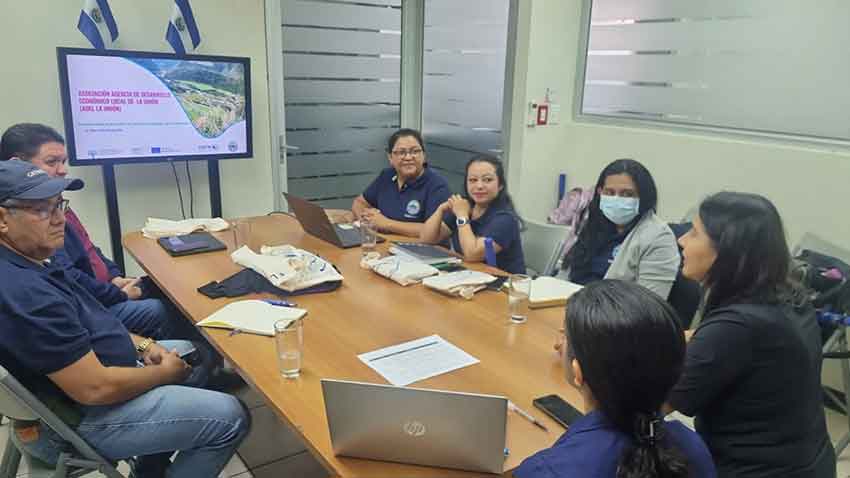
The progress and lessons learned from the Peace, Action, Resilience and Sustainability in Latin American Landscapes Project (PARES) in El Salvador were presented to the Ministry of Environment and Natural Resources (MARN) during a working meeting held on January 20. The meeting aimed to share the project’s methodological approach and the preliminary results of the pilot implemented by ADEL La Unión in the La Unión Sur landscape.
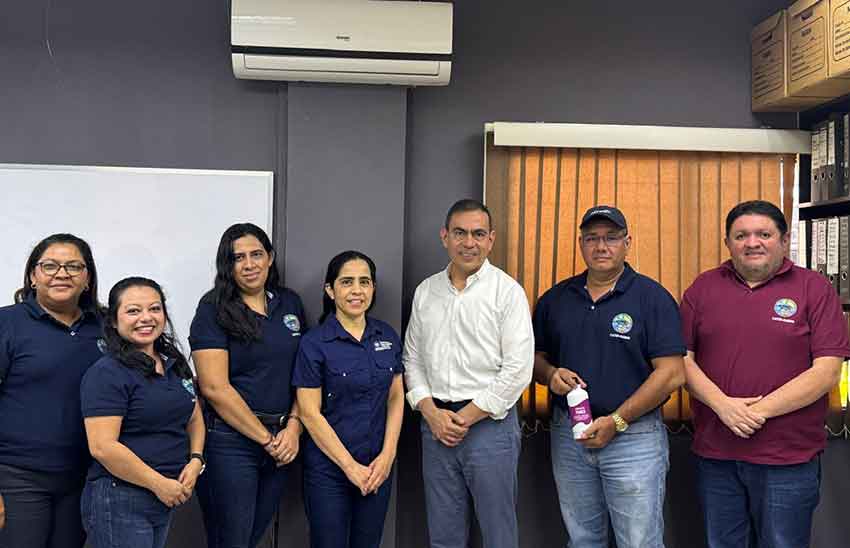
The meeting brought together representatives from MARN, including Jessica La Guardia, Head of the Climate Change Unit, and Rosa Margarita García, Adaptation Specialist, as well as Mario Chavarría, Manager of ADEL La Unión, and Sandra Campos and Luis René Zúñiga, technical staff from this organization. Also participating were Abi Márquez, officer of the United Nations Environment Programme (UNEP); Ileana Ávalos, Coordinator of the PARES Project and researcher at CATIE (Tropical Agricultural Research and Higher Education Center); and Luis Menjívar, CATIE’s representative in El Salvador.
This initiative is being developed within the framework of the Alliance “Facilitating tailored approaches to address peace- and security-related climate and environmental risks,” through which the European Union (EU) and UNEP have joined efforts with CATIE to implement the PARES Project in Latin America.
During the session, ADEL La Unión presented the work of its organization through Sandra Campos, a technical staff member, who emphasized that the pilot in La Unión Sur focuses on strengthening climate and productive resilience through Nature-based Solutions (NbS) centered on: i) capacity building of producers in sustainable agricultural techniques; ii) recovery of native seeds and the progressive establishment of a community seed bank; iii) regenerative soil management and production of organic inputs; iv) productive diversification; and v) promotion of agroforestry systems and restoration actions oriented toward water recharge zones.
Subsequently, Rosa Margarita García, MARN official and adaptation specialist, highlighted the relevance of the project’s methodological approach for deepening the analysis beyond visible threats. As she noted, this type of process makes it possible to better understand the structural causes of climate risks: “Although it may sometimes seem evident to identify the threats in a territory, it is essential to analyze where the causes truly lie. In many cases we think the origin is one thing, but it goes further back,” she explained.
She also underscored the importance of conducting a comprehensive territorial analysis as a basis for decision-making and the selection of appropriate solutions: “Territorial analysis is key to identifying interventions that are better adapted to people, ecosystems, and the economy. This is vital for projects and actions implemented in the territory.”
García also emphasized the need to strengthen monitoring and evaluation processes to demonstrate the impacts of interventions: “It is important to have follow-up mechanisms that allow impacts to be measured at the level of ecosystems, productive systems, communities, and natural resources in general. It will be very valuable to observe how these changes manifest over time.” Finally, she reiterated her willingness to maintain ongoing technical coordination with the project.
The progress reported by ADEL La Unión included:
- Capacity building: 225 families reported having strengthened their knowledge of sustainable agricultural techniques, following a two-phase strategy that prioritized outreach to increase community participation.
- Recovery of native seeds: 24 community leaders were trained to promote the recovery of native seeds, combining local knowledge with technical support. Seed exchanges were carried out, and initial safeguarding efforts advanced with support from guidelines received during a technical visit to the National Center for Agricultural and Forestry Technology (CENTA).
- Community seed bank: The establishment of a mixed native seed bank is projected in coordination with the Nueva España Irrigators Association (ARNE).
This meeting reaffirmed the commitment to maintain technical coordination with MARN to strengthen coherence between territorial progress and national priorities, especially in matters related to water, soil, productive resilience, and climate risk management.
More information
Ileana Ávalos Rodríguez
PARES Project Coordinator
Climate Action Unit
CATIE
ileana.avalos@catie.ac.cr
Written by:
Karla Salazar Leiva
Communicator
Communications and Marketing Office
CATIE
karla.salazar@catie.ac.cr