CATIE shares lessons learned from the PARES project in the United Nations community of practice on climate, peace, and security
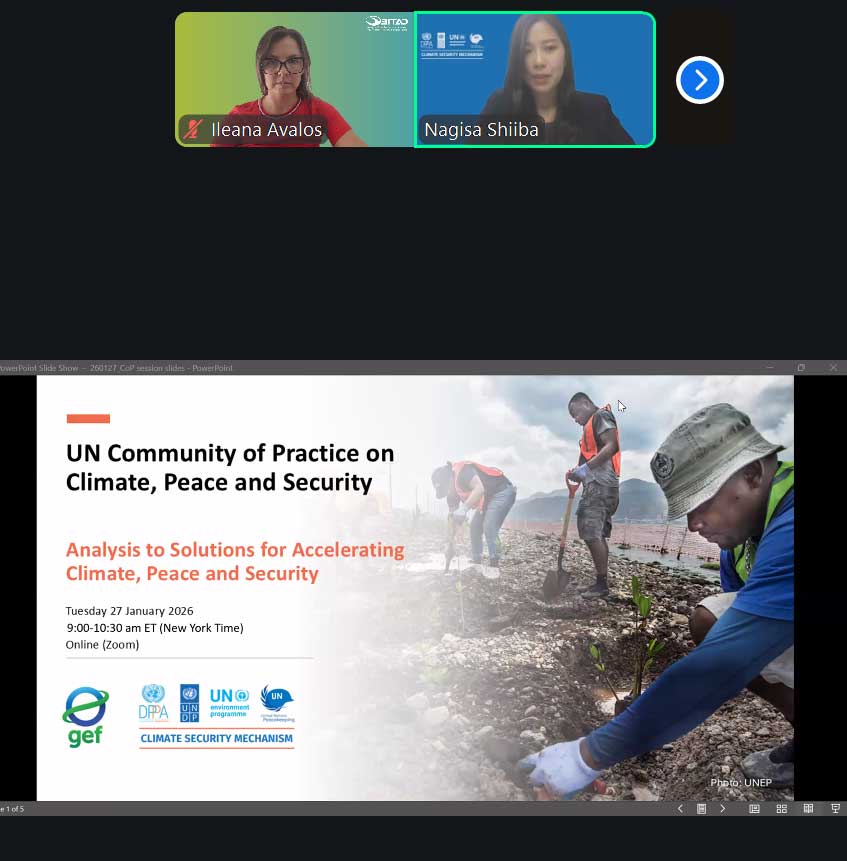
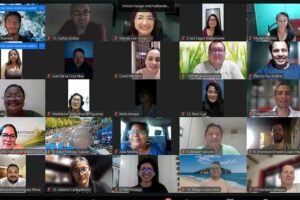
- The session, facilitated by the Climate Security Mechanism (CSM) in collaboration with the Global Environment Facility (GEF), brought together nearly 80 participants to exchange experiences and discuss how to accelerate the transition from assessment to decision-ready action in the climate–peace–security nexus.
CATIE (Tropical Agricultural Research and Higher Education Center), through its Climate Action Unit (UAC), participated as a speaker in a session of the United Nations community of practice on climate, peace, and security (CPS), focused on analyzing how to translate participatory diagnostics and vulnerability analyses into concrete and sustained interventions in the territories. The virtual meeting brought together nearly 80 participants from teams and working networks of the United Nations system and its partner organizations.
In this space, experiences and lessons learned from the Peace, Action, Resilience and Sustainability in Landscapes of Latin America Project (PARES) were shared. The project is implemented by CATIE in collaboration with the United Nations Environment Programme (UNEP), within the framework of the EU–UNEP alliance on Climate, Environment, Peace and Security.
The project works in 12 landscapes across six countries—Mexico, Guatemala, El Salvador, Honduras, Colombia, and Ecuador—and combines grants to local organizations with technical assistance and peer-to-peer learning processes, with the aim of strengthening participatory diagnostics, pilot design, and articulation with decision-making spaces.
From assessments to action: how is PARES doing it?

During her presentation, Ileana Ávalos, researcher at CATIE’s Climate Action Unit and coordinator of PARES, explained how the project moves from participatory diagnostics to decision-ready products through a work pathway that includes: i) community co-production of territorial diagnostics with mapping of climatic and non-climatic threats, ecosystem services, and livelihoods, incorporating seasonality and differentiated exposure; ii) transformation of these inputs into applied evidence, especially maps and analyses that make it possible to identify “hotspots,” trade-offs, and levels of severity associated with pressures on ecosystem services and conflict dynamics; and iii) co-design of nature-based solution (NbS) pilots with co-benefits for resilience, social cohesion, and security, tailored to governance realities and validated with the same communities.
“Diagnostics generate impact when they become a shared decision-making tool: they help prioritize actions, negotiate trade-offs, and coordinate implementation with local leadership. That is the bridge we seek to close between diagnosis and action,” Ávalos noted.
Challenges and opportunities to sustain impact in the climate–peace–security nexus
The presentation also highlighted challenges and opportunities shaping the transition from assessment to implementation. Among the main challenges emphasized were governance gaps and scale mismatches that hinder coordination across sectors and levels; the need to move from incremental adaptation toward more transformative adaptation pathways; and the importance of incorporating conflict sensitivity, with safeguards, coordination, and feedback loops to avoid shifting risks between groups or territories.
Among the opportunities, the value of communities of practice was underscored as a working space for exchange and problem-solving, as well as the strengthening of institutional ownership by connecting locally generated evidence with national planning and investment spaces.
More information/written by:
Ileana Ávalos Rodríguez
PARES Project Coordinator
Climate Action Unit
CATIE
ileana.avalos@catie.ac.cr
Tag:climate, comunidad práctica, PARES, peace, seguridad