• About CATIE
    • Our Essence
    • Mission, vision and values
    • Strategic Vision
    • Authorities
    • Strategic alliances and projects
    • Institutional transparency
    • CATIE Campus: A Space for Restoration
  • Research for development
  • Education
    • Oferta Académica
    • Conózcanos
    • Graduate School
    • Capacitación continua
    • Financing
    • Virtual Campus
    • Online payment
  • Our commercial offer
    • Commercial Farm
    • Botanical Garden
    • Forest Seed Bank
    • Biotechnology Laboratory
    • CATIE Specialty Coffee
    • Accommodation at CATIE
    • “Repurpose with purpose”
  • CATIE in the region
    • Belize
    • Bolivia
    • Colombia
    • Costa Rica
    • Ecuador
    • El Salvador
    • Guatemala
    • Haiti
    • Honduras
    • Mexico
    • Nicaragua
    • Panama
    • Peru
    • Dominican Republic
    Have any question?
    (00) 123 456 789
    hello@eduma.com
    • Spanish
    • CATIE in press
    • Library Services
    • Employment
    • Licitaciones

    CATIE
    • About CATIE
      • Our Essence
      • Mission, vision and values
      • Strategic Vision
      • Authorities
      • Strategic alliances and projects
      • Institutional transparency
      • CATIE Campus: A Space for Restoration
    • Research for development
    • Education
      • Oferta Académica
      • Conózcanos
      • Graduate School
      • Capacitación continua
      • Financing
      • Virtual Campus
      • Online payment
    • Our commercial offer
      • Commercial Farm
      • Botanical Garden
      • Forest Seed Bank
      • Biotechnology Laboratory
      • CATIE Specialty Coffee
      • Accommodation at CATIE
      • “Repurpose with purpose”
    • CATIE in the region
      • Belize
      • Bolivia
      • Colombia
      • Costa Rica
      • Ecuador
      • El Salvador
      • Guatemala
      • Haiti
      • Honduras
      • Mexico
      • Nicaragua
      • Panama
      • Peru
      • Dominican Republic

      News

      • Home
      • Blog
      • News
      • CATIE promotes national dialogue to reduce gaps in higher education in Indigenous territories of Costa Rica
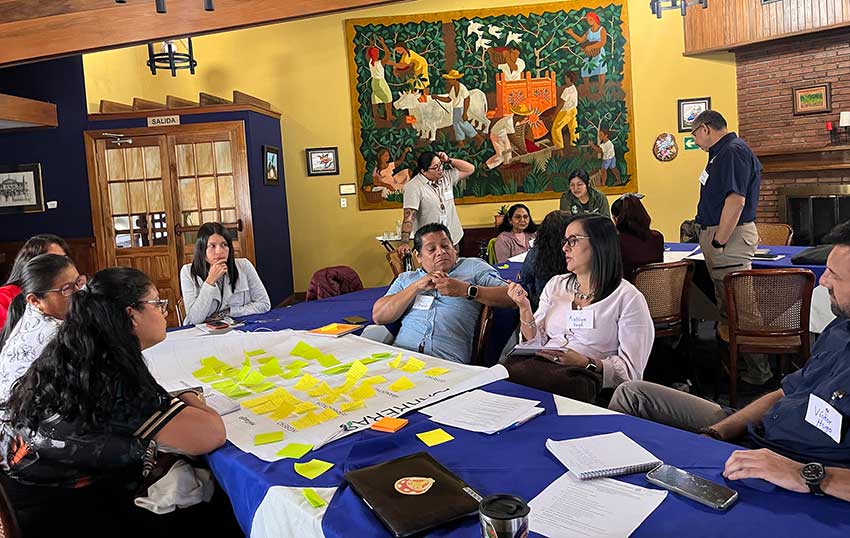
      CATIE promotes national dialogue to reduce gaps in higher education in Indigenous territories of Costa Rica

      • Posted by Karla Salazar Leiva
      • Categories News
      • Date 27 February, 2026
      • The workshop shared the results of a case study on access, retention, and graduation conditions of the Indigenous population in higher education in Costa Rica and highlighted the differentiated barriers faced by Indigenous women.

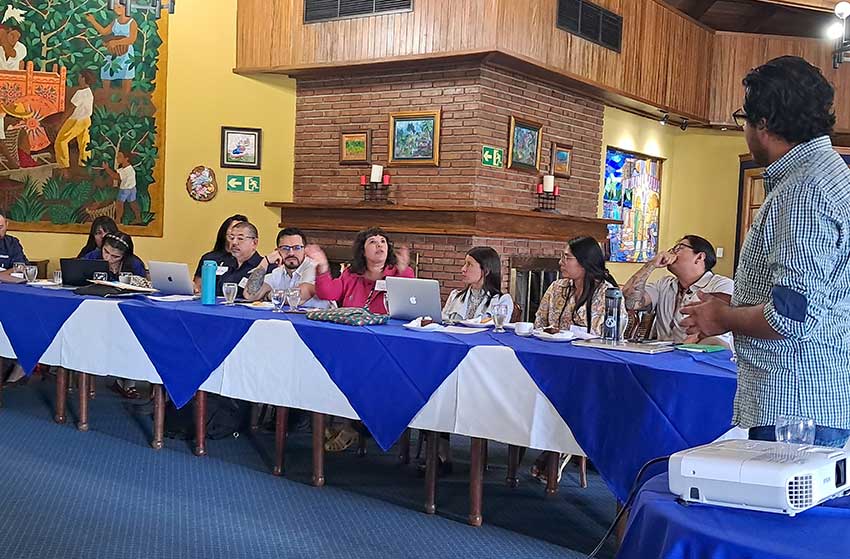
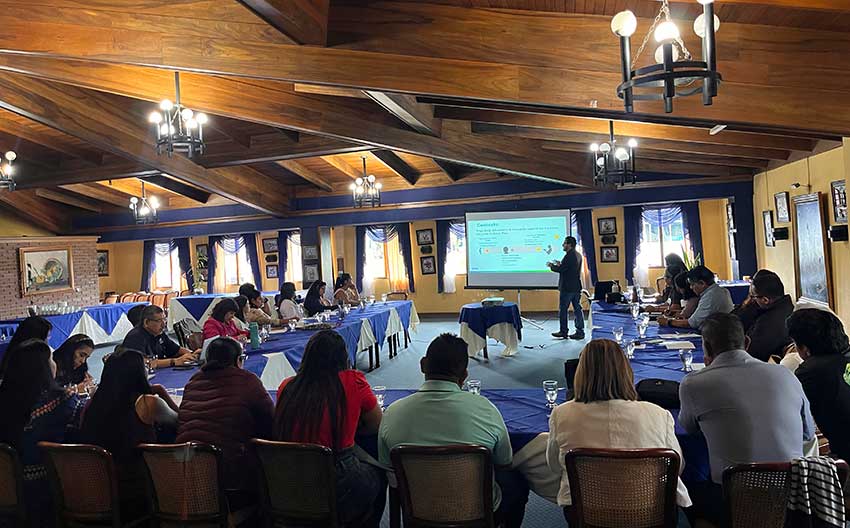
      On February 17, CATIE (Tropical Agricultural Research and Higher Education Center) held a workshop to present the results of the diagnostic study on the educational trajectories of Indigenous people in higher education institutions, within the framework of the regional project “Towards the construction of inclusion policies for Indigenous peoples, especially women, in higher education institutions and academic research in Central America.”

      The project is led by the Centro de Investigaciones y Estudios Superiores en Antropología Social (CIESAS) of Mexico, with funding from the International Development Research Centre (IDRC) of Canada. In Costa Rica, the initiative is coordinated by CATIE, while in Guatemala it involves the Universidad del Valle de Guatemala and in Belize the Galen University.
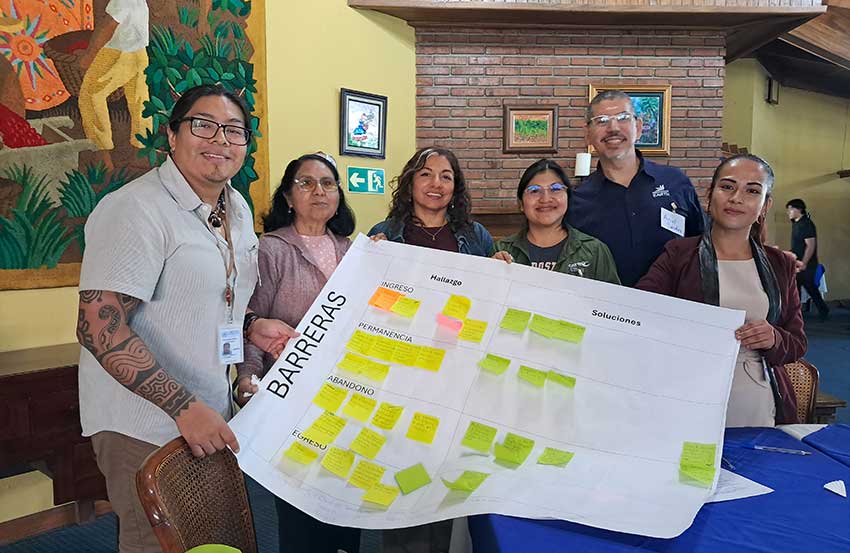
      The diagnostic study analyzed educational trajectories at four key stages: admission, retention, dropout, and graduation, and assessed the influence of individual, family-community, and institutional factors. The research combined quantitative data with interviews conducted with individuals from 23 Indigenous territories and from Sixaola.
      The findings show that exclusion does not stem from isolated situations, but rather from structural conditions within the education system. Of the 49 individuals interviewed, only 8% graduated from university and 12% dropped out. In addition, 45% of those who enrolled had to leave their territory to continue their academic education.

      Among the main barriers identified are the geographic distance to university campuses, socioeconomic conditions, limited connectivity, unequal quality of secondary education in Indigenous territories, the complexity and limited support in administrative procedures, and persistent racism. Twenty-eight percent of respondents reported having experienced discrimination due to their language, 22% due to their physical features, and 18% within academic spaces.

      The study also highlights that Indigenous women face “triple discrimination” associated with their ethnic origin, gender, and socioeconomic condition. Traditional expectations related to caregiving and domestic work, combined with forced migration to pursue studies, increase the likelihood of academic dropout. In this regard, the need for specific measures was emphasized, such as differentiated scholarships, childcare services, flexible schedules, and effective anti-discrimination protocols.

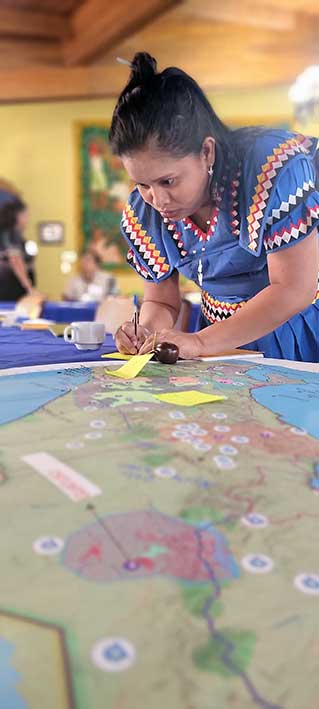
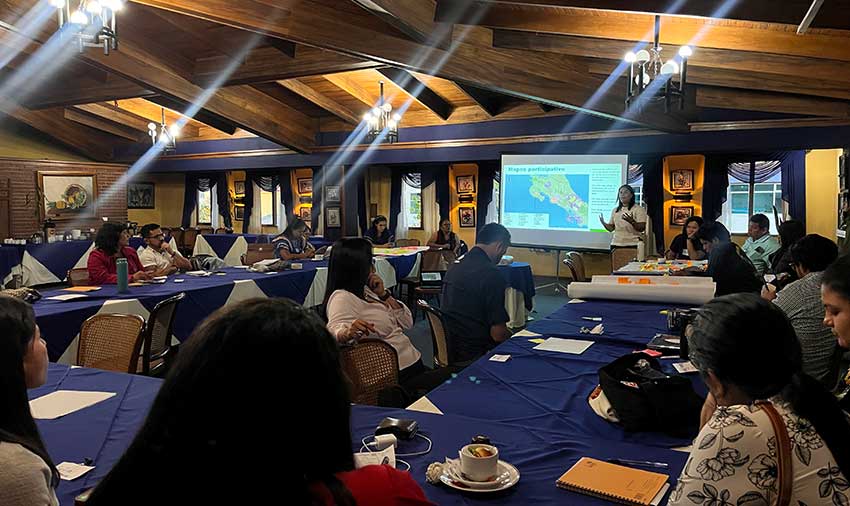
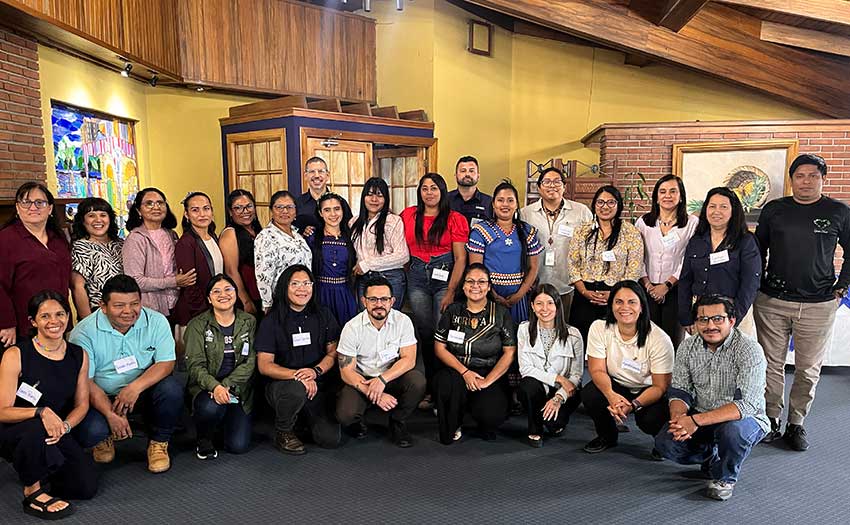
      The workshop brought together 34 representatives from Indigenous organizations and student movements, public universities (UCR, UNA, TEC, and UNED) and private institutions (Universidad EARTH), state institutions, and international organizations. Participants validated the findings and worked in dialogue groups to build joint solutions and define concrete contributions that they expressed they could promote in the short term to begin implementing them.

      “Indigenous education is not a gift from the State; it is the right for our roots to flourish in classrooms. We are not here to follow a predetermined path, but to build together a path where all voices can defend the right to Indigenous education. It means understanding that the classroom must speak more than one language and feel more than one culture. The future of our education is not dictated; it is built hand in hand, together, community by community,” said Rebeca Quirós, an Indigenous woman who participated in the workshop.
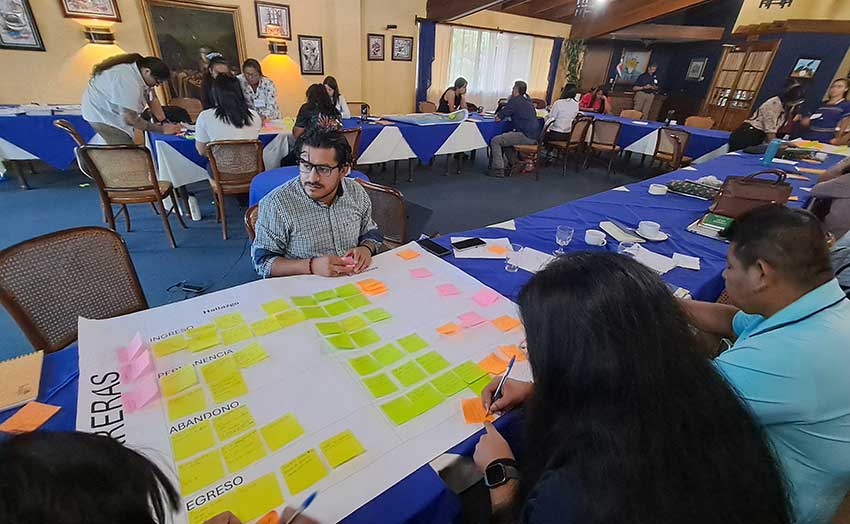
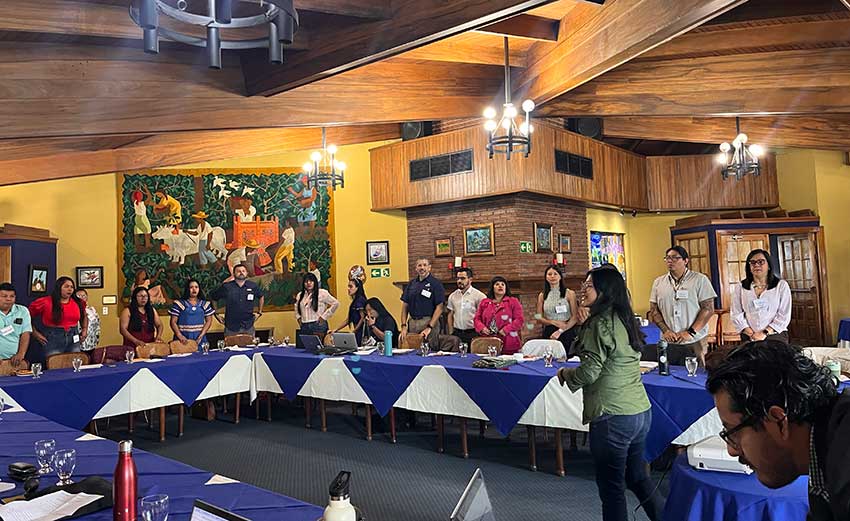
      Cristina Fueres and William Menchu, who led the workshop on behalf of CATIE, noted that reducing gaps in higher education requires sustained collaborative work among communities, universities, and public institutions, with each actor assuming a concrete commitment.

      “I congratulate CATIE for this first step, for beginning to address an issue that concerns Indigenous territories and peoples,” stated Thalía Jiménez, an Indigenous woman who participated in the workshop.

      As next steps, CATIE will systematize the results of the process. Based on this, CATIE will facilitate relevant connections and coordination among local actors and institutions capable of contributing to each prioritized solution and will organize a new meeting together with the Subcommission on Peoples and Territories of CONARE in order to ensure follow-up on the proposed actions.
      More information:

      Mariela Leandro
      CIESAS-CATIE Project Coordinator
      CATIE
      mleandro@catie.ac.cr

      Karina Poveda Coto
      Coordinator, Women, Rural Youth and Indigenous Communities Thematic Area
      CATIE
      Karina.poveda@catie.ac.cr

      Cristina Fueres
      Technical Team, CATIE
      cristina.fueres@catie.ac.cr

      William Menchu
      Technical Team, CATIE
      william.menchu@catie.ac.cr

      Written by:

      Karla Salazar Leiva
      Communicator
      Communications and Marketing Office
      CATIE
      salazark@catie.ac.cr

      (Visited 15 times, 22 visits today)

      Tag:costa rica, educación superior, indígenas

      • Share:
      Karla Salazar Leiva

      Journalist

      Previous post

      CATIE and the Ministry of Agriculture of Honduras advance a joint agenda on sustainable agriculture
      27 February, 2026

      You may also like

      CATIE-y-el-Ministerio-de-Agricultura-de-Honduras-impulsan–agenda-conjunta-en-agricultura-sostenible
      CATIE and the Ministry of Agriculture of Honduras advance a joint agenda on sustainable agriculture
      27 February, 2026
      decano-reconocimiento1
      CATIE Dean Receives International Recognition for Social and Community Impact
      26 February, 2026
      analisis-datos1
      CATIE contributes to strengthening regional capacities through a technical update cycle on data analysis for tropical agricultural research
      26 February, 2026

      Search

      Categories

      • CATIE IN PRESS
      • EMPLOYMENT
      • Events
      • News
      • Noticias Guatemala
      • Noticias institucionales
      • Noticias Posgrado

      CATIE IN PRESS


      (506) 2558-2000


      comunica@catie.ac.cr


      Facebook-f


      Twitter


      Instagram


      Wikipedia-w


      Linkedin-in


      Youtube

      Suscribe

      • Sitemap
      • Contact
      Utilizamos cookies con el fin de ofrecer, mejorar, proteger y promocionar nuestros servicios.Al hacer clic en "Aceptar todo", acepta el uso de TODAS las cookies. Sin embargo, puede visitar Configuración de Cookies para proporcionar un consentimiento controlado.
      RechazarAceptar todo
      Manage consent

      Privacy Overview

      Este sitio web utiliza cookies para mejorar su experiencia mientras navega por el sitio web. De estas, las cookies que se clasifican como necesarias se almacenan en su navegador, ya que son esenciales para el funcionamiento de las funcionalidades básicas del sitio web. También utilizamos cookies de terceros que nos ayudan a analizar y comprender cómo utiliza este sitio web. Estas cookies se almacenarán en su navegador solo con su consentimiento. También tiene la opción de optar por no recibir estas cookies. Pero la exclusión voluntaria de algunas de estas cookies puede afectar su experiencia de navegación.
      Necessary
      Always Enabled
      Necessary cookies are absolutely essential for the website to function properly. These cookies ensure basic functionalities and security features of the website, anonymously.
      Functional
      Functional cookies help to perform certain functionalities like sharing the content of the website on social media platforms, collect feedbacks, and other third-party features.
      Performance
      Performance cookies are used to understand and analyze the key performance indexes of the website which helps in delivering a better user experience for the visitors.
      Analytics
      Analytical cookies are used to understand how visitors interact with the website. These cookies help provide information on metrics the number of visitors, bounce rate, traffic source, etc.
      Advertisement
      Advertisement cookies are used to provide visitors with relevant ads and marketing campaigns. These cookies track visitors across websites and collect information to provide customized ads.
      Others
      Other uncategorized cookies are those that are being analyzed and have not been classified into a category as yet.
      SAVE & ACCEPT