CATIE commemorates Women’s Month with a space for gathering, art, reflection, and environmental advocacy
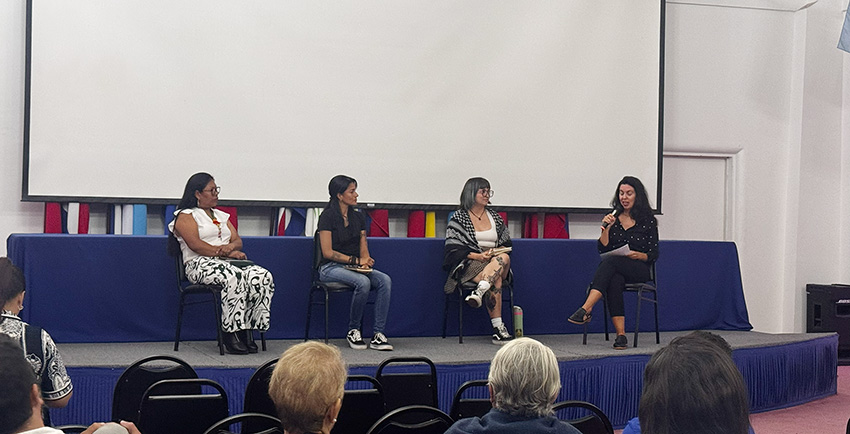
- The space highlighted women’s leadership, promoting cultural dialogue and collective action.
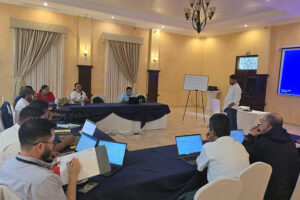
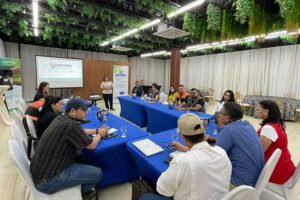
Last Friday, March 20, CATIE (Tropical Agricultural Research and Higher Education Center) commemorated Women’s Month with an event that combined film, dialogue, entrepreneurship, and cultural expression.
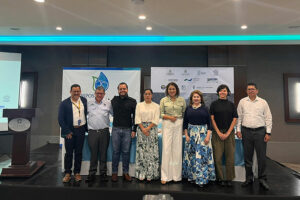
The activity brought together more than 60 participants, including CATIE staff members, entrepreneurs, women leaders, and members of the Turrialba community.
The event, held at the Wallace Building on campus, was jointly organized by different CATIE units, the Tejiendo Redes Project, the Escazú Alliance, and the Ministry of Culture and Youth of Costa Rica.
Voices from the front lines
The heart of the event was the screening of the documentary Mujeres del Manglar, directed by Astrid Peraza, followed by a dialogue forum moderated by María Sol González, specialist in human rights and environmental rights from the Tejiendo Redes Project. The panel brought together three individuals whose trajectories embody the defense of territories and ecosystems from different perspectives.
Elizabeth Herrera, a community leader from the Cabécar Indigenous territory of Alto Chirripó, shared her work in defending collective rights and territorial governance of Indigenous peoples, highlighting the fundamental role of Indigenous women in the conservation of their territories and as holders of knowledge.
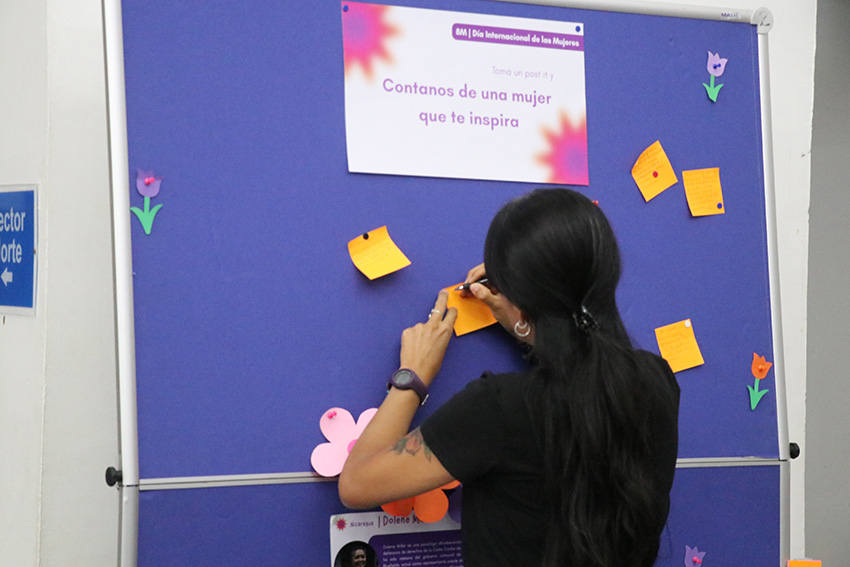
Tatiana Chacón, an environmental activist from La Suiza, shared how her commitment to environmental protection emerged through activism focused on cleaning public spaces in her community. She currently supports individuals facing environmental issues in their surroundings, many of whom lack the knowledge or feel afraid to take action, assisting them in reporting processes and strengthening citizen participation and action.
Judith Pereira, an international relations specialist and co-founder of the Youth and Climate Change Network of Costa Rica and member of the Escazú Alliance, explained the importance of implementing the Escazú Agreement in the region and the role that stories such as those in the documentary play in amplifying the voices of environmental defenders.
The dialogue also addressed the differentiated risks faced by women defenders and the importance of regional and international protection frameworks to ensure their safety and integrity.
Collectives, entrepreneurship, and culture
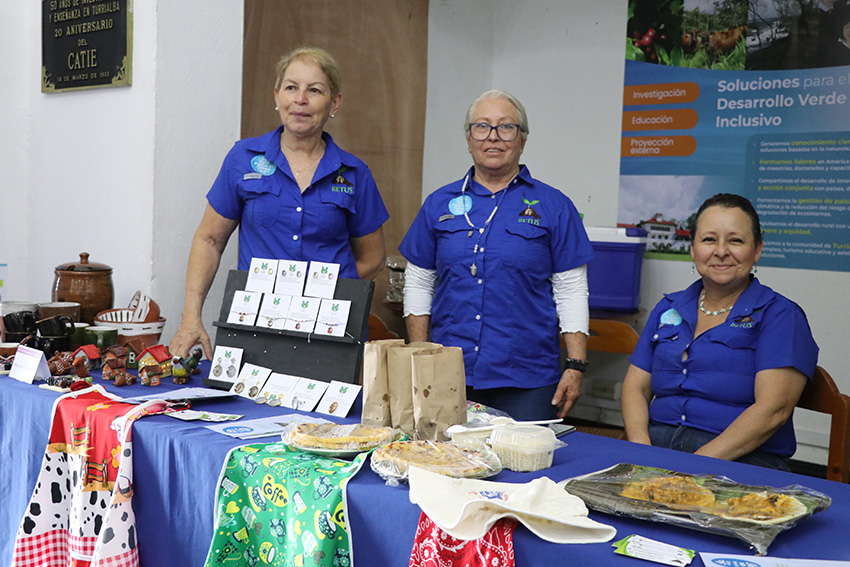
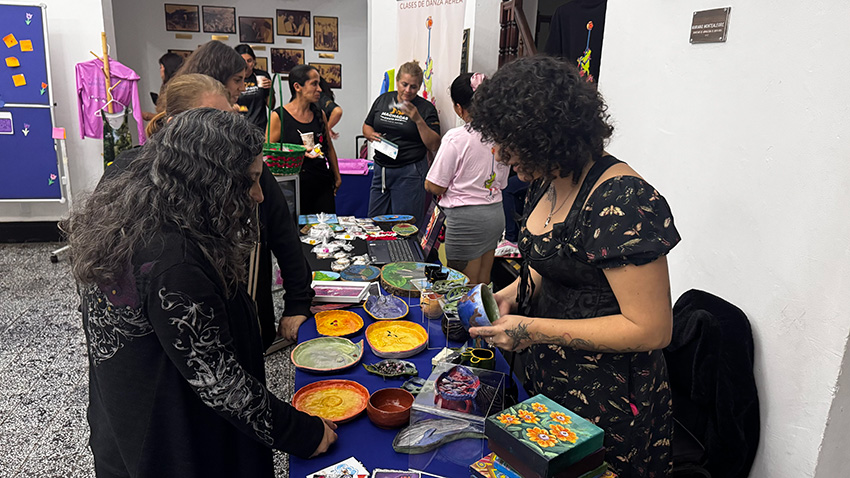
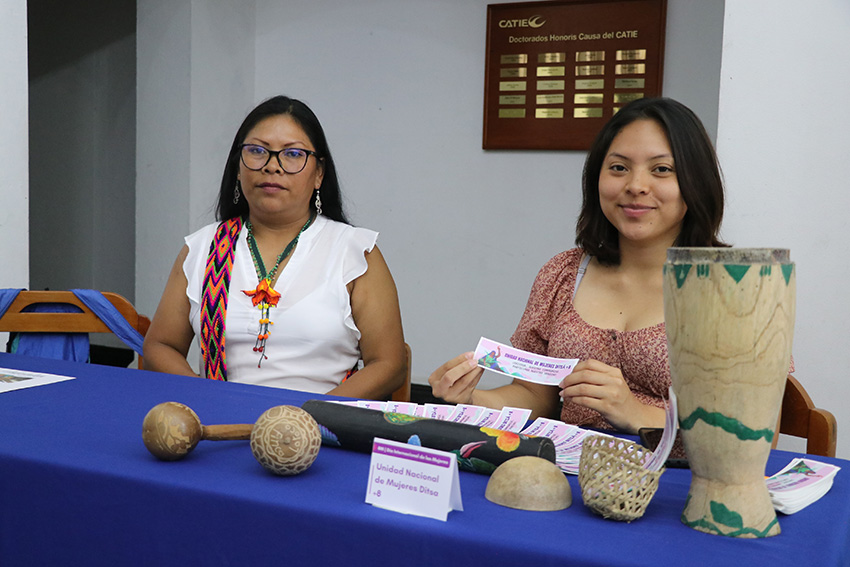
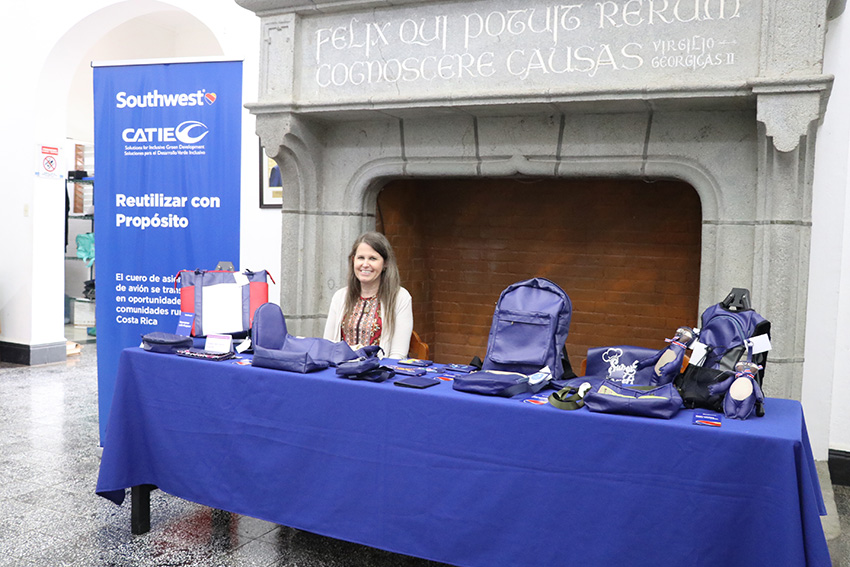
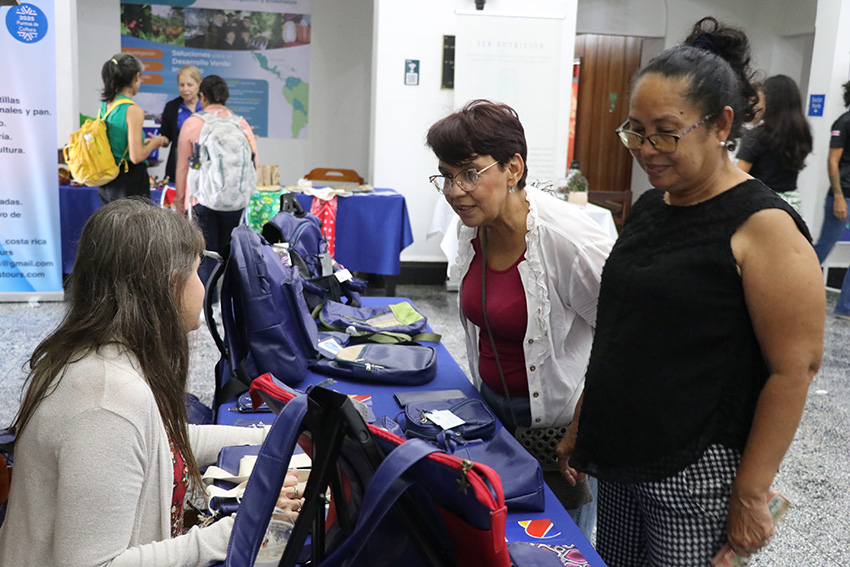
The lobby of the Wallace Building was transformed into a space to showcase collectives and organizations working with and for women. Participants included Grupo Machacas, Casa Alma, the National Women’s Unit Ditsa+8, CATIE and Repurpose with Purpose project the Environmental Collective of La Suiza, and Grupo Retus, along with artisans and local entrepreneurs from the Turrialba region. The space also featured an open microphone where participants shared their voices through poetry, singing, and spoken word.
The cultural dimension of the event was marked by two artistic performances by the folkloric dance group of the University of Costa Rica and Proyección Folclórica Lava y Leyenda, who delighted attendees during the fair.
A gathering that keeps what matters most in focus
“This event emerged from a shared desire to create spaces for connection, exchange, and support among women, and among all people who recognize that equality is a collective struggle. It was also an opportunity to remember that environmental and social challenges intersect with multiple inequalities that we cannot ignore: the territory where one lives, the culture one belongs to, gender, age, and social class. Making these intersections visible and acting from them, with awareness, is part of what makes more just and sustainable development possible. The afternoon of March 20 demonstrated that such spaces are possible when commitment and coordination are sustained and driven by the community,” expressed Karina Poveda, Fernanda Carrillo, and María Sol González, coordinators of the event.
From CATIE, efforts continue to promote spaces, projects, and partnerships that strengthen women’s leadership in the sustainable management of natural resources and territorial development. Through initiatives that integrate a gender, inclusion, and community participation approach, the institution reaffirms its commitment to building more equitable and sustainable societies in Latin America and the Caribbean.
More information/written by:
Karina Poveda Coto
Coordinator, Women, Rural Youth and Indigenous Communities Thematic Area
CATIE
Karina.poveda@catie.ac.cr
Fernanda Carrillo Chacón
Gender, equity and human rights specialist in rural areas
Proyecto ESCALAR-ASDI
fernanda.carrillo@catie.ac.cr
María Sol González Sañudo
Specialist in Human Rights, Environmental Rights, and Forest Equity
Sol.gonzalez@catie.ac.cr
Edición:
Karla Madrigal Pereira
Communicator
Communications and Marketing Office
CATIE
Karla.madrigal@catie.ac.cr