ESCALAR Project Shares Key Advances in Climate Adaptation at the Global CSA Conference and COP30
- The initiative continues expanding partnerships to bring proven and sustainable solutions to more communities across the Dry Corridor.
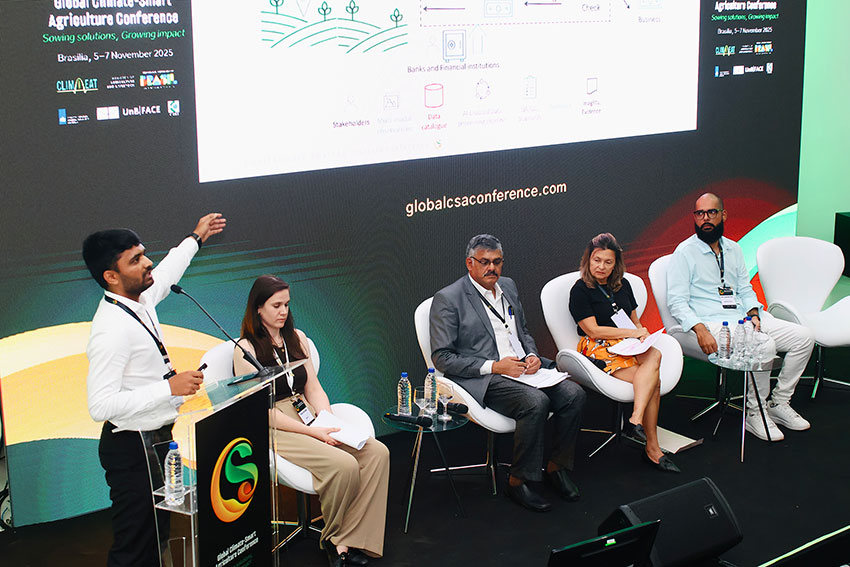
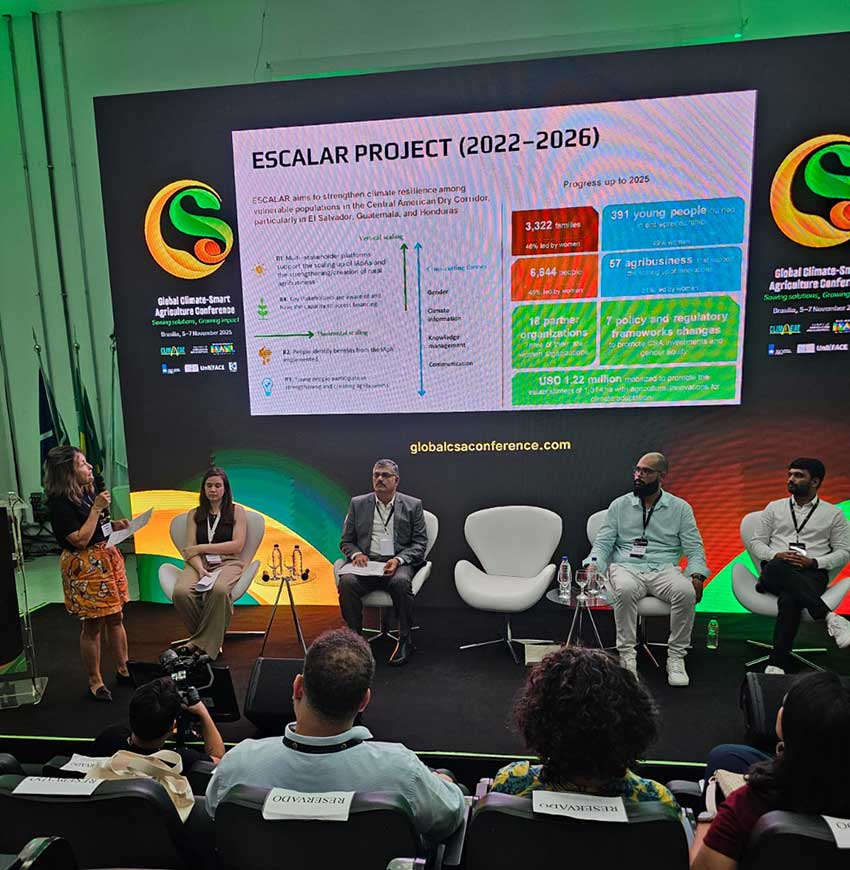
The ESCALAR project—one of the region’s leading initiatives on climate adaptation in the Central American Dry Corridor (CADC) and funded by Swedish Cooperation—participated in two major international dialogue spaces: the Global CSA Conference (3–7 de noviembre) y la Cumbre del Clima COP30 (November 3–7) and the COP30 Climate Summit (November 10–13). Representing the project, Dr. Leida Mercado, ESCALAR’s leader, shared progress, results, and recommendations to accelerate climate resilience in one of the world’s most vulnerable regions.
ESCALAR as a Technical Reference in Resilient Agriculture
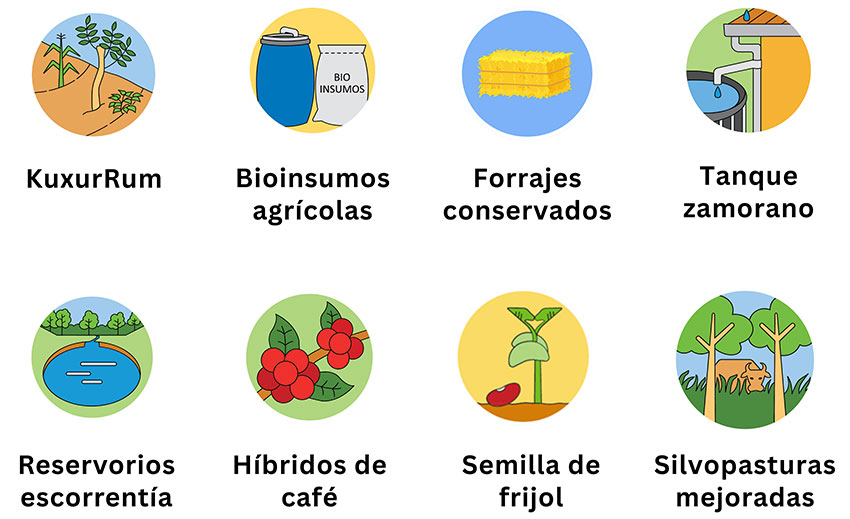
During her participation in the Global CSA Conference, Dr. Mercado presented ESCALAR’s progress using the eight accelerators of change methodology by Thornton et al. (2024), which indicates that technological innovation can only achieve widespread use when it is supported by strong social and institutional backing. The analysis linked the eight accelerators with the eight innovations promoted by the project:
The results reveal significant progress in five key accelerators: building trust, fostering dialogue, transforming mindsets, and preventing unintended effects. These achievements demonstrate the project’s capacity to build consensus, strengthen social acceptance, and secure the institutional support required to scale innovations. Training and technical assistance have played a decisive role in shifting perceptions and promoting widespread uptake of the innovations, while the monitoring system—developed with local partners—has enabled timely identification and mitigation of potential negative impacts.
The study also reports moderate progress in the accelerator related to public policies and regulations, resulting from collaboration with local governments and governance platforms. However, it highlights the need to further strengthen engagement with national governments to consolidate more robust enabling frameworks.
In contrast, the accelerators related to access to finance and market incentives present the greatest challenges. Despite ongoing efforts, limited financial resources remain a significant barrier to expanding the reach of innovations—an issue widely documented in previous studies.
Overall, the findings align with the project’s trajectory and provide valuable insights to guide future actions aimed at enabling broader and more sustainable scaling. The analytical framework has proven to be a solid tool for assessing the progress of climate-resilient agricultural innovations. The ESCALAR team is currently working on more explicitly integrating gender and equity considerations into this approach.
Meetings were also held with representatives from IDB, CRS, World Bank, GIZ, and Wageningen University. ESCALAR will follow up on the agreements reached to continue strengthening project implementation.
ESCALAR at COP30
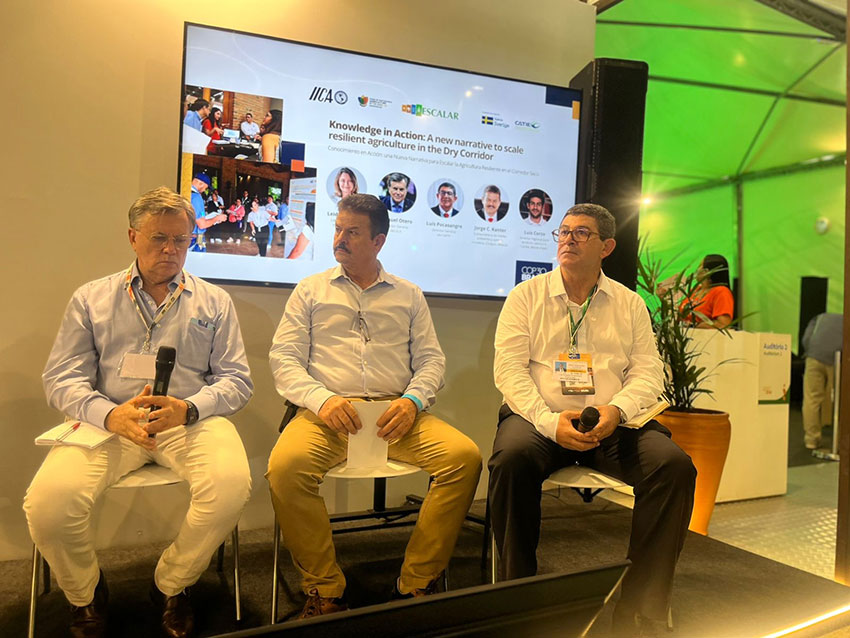
The following week, at COP30, Dr. Mercado moderated the panel “Knowledge into Action: A New Narrative for Scaling Resilient Agriculture in the Central American Dry Corridor”, organized by ESCALAR–CATIE in collaboration with IICA.
This dialogue demonstrated that agricultural innovations for climate adaptation are already generating real impacts on the productive, economic, and social life of communities. The panelists agreed that true scaling occurs when science engages in dialogue with local knowledge; when producers, women, and youth participate from the very beginning in the design of projects and strategies; and when solutions are aligned with governance, public policies, and climate financing. The central message is clear: resilience is not built through isolated actions, but through joint work, trust among a broad network of actors, and sustained commitment to the most vulnerable territories.
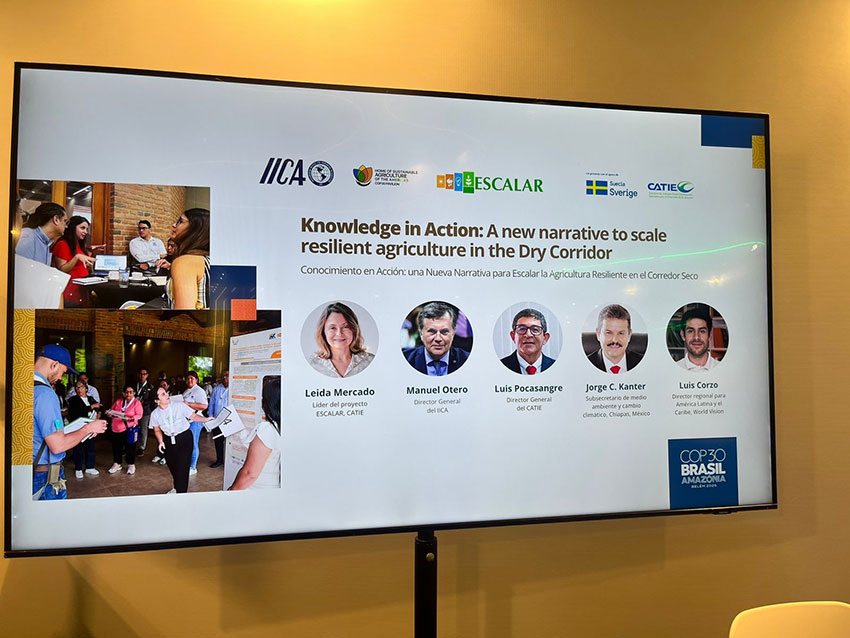
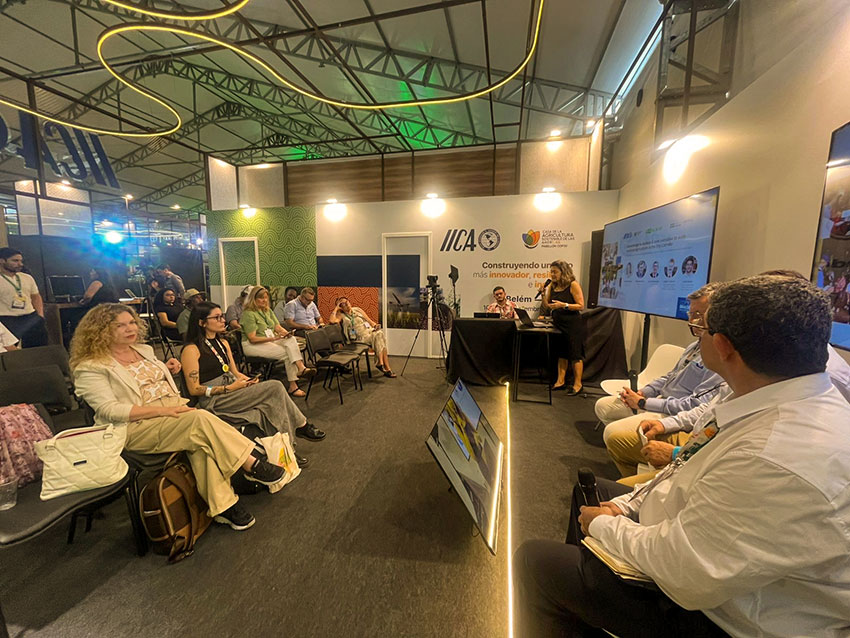
The panel brought together representatives from key institutions in the region, who agreed on the urgency of moving from evidence to action by aligning financing, public policies, and territorial capacities.
New partnerships to scale climate resilience
During COP30, CATIE and World Vision reaffirmed their declaration of intent for collaboration, aimed at identifying and promoting joint actions to be implemented in 2026 to strengthen climate resilience in rural communities. A technical dialogue also advanced with the Mexican organization CECROPIA, exploring opportunities for knowledge exchange on market-based mechanisms—including carbon and biodiversity credits—as pathways to expand access to climate finance in the region.
- The Economics of Climate Change in Latin America and the Caribbean, 2025: Climate Action to Overcome Development Traps. (Currently available only in English.)
CATIE and ECLAC explored potential collaboration spaces for 2026, including the institution’s contributions to the next study on the economics of climate change in Latin America and the Caribbean.
An Initiative that Consolidates Learning and Looks Toward Expansion
The participation of the ESCALAR project in these international spaces was made possible thanks to the commitment of Swedish Cooperation, through ASDI, to climate adaptation in the Trifinio Region. Its presence at the Global CSA Conference and COP30 reaffirms the value of the project as a replicable model for accelerating resilience and expanding the adoption of effective solutions in other territories of the Central American Dry Corridor.
ESCALAR will continue strengthening partnerships and mobilizing collaboration opportunities that make it possible to bring these innovations to more communities, helping to reduce climate risks, improve livelihoods, and advance toward more sustainable, inclusive, and resilient development for the most vulnerable populations in the region.
More information/written by:
Leida Mercado
Leader, ESCALAR Project – CATIE
lmercado@catie.ac.cr
Arely Valdivia
Communications Specialist, ESCALAR – CATIE
arely.valdivia@catie.ac.cr
arely.valdivia@catie.ac.cr