CIENPINOS demonstrates in the field its model for integrating traditional knowledge, science, and local governance in Cuba
- A Swedish Cooperation evaluation mission verified the project’s impact on municipal climate governance, sustainable agroforestry production, and the strengthening of community fabric in Cienfuegos and Pinar del Río.
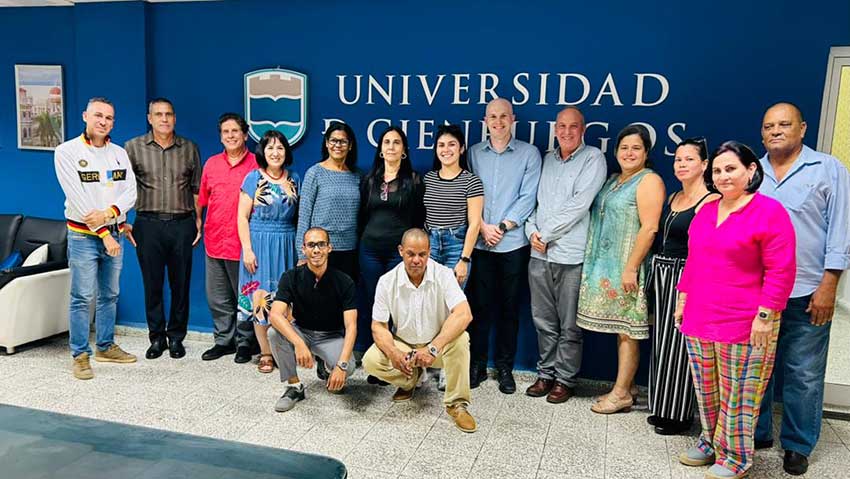
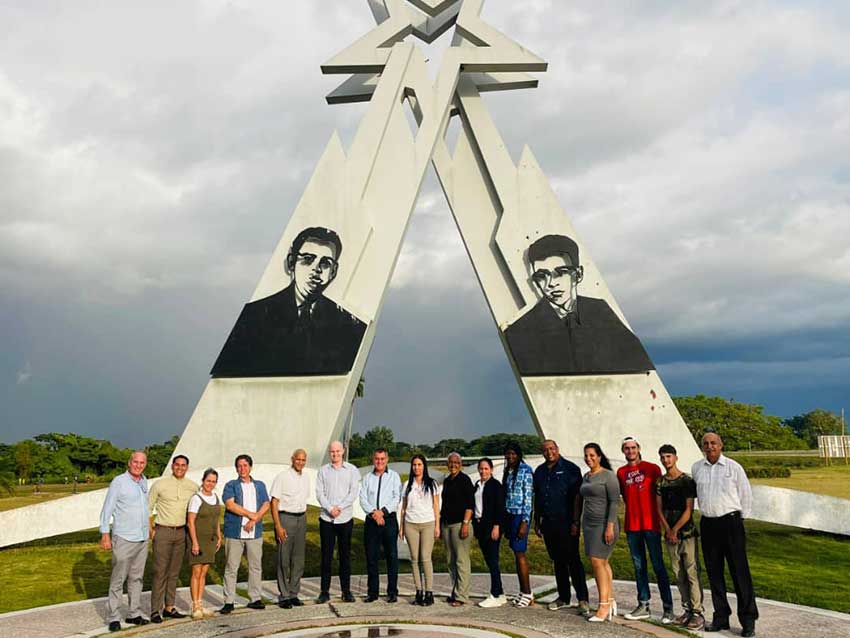
Between January 22 and 29, 2026, a delegation from the Swedish International Development Cooperation Agency (ASDI) conducted an evaluation visit to the project “Municipal climate governance and sustainable agroforestry food production with low emissions and adapted to climate change in Cienfuegos and Pinar del Río, Cuba” (CIENPINOS), which focuses on strengthening municipal climate governance and sustainable agroforestry production in four municipalities of the provinces of Cienfuegos and Pinar del Río, Cuba. The mission was composed of Ludvig Hällgren, ASDI program officer, and Joanna Rocco, agency officer.
The first part of these working sessions took place in the province of Cienfuegos, where the delegation was received by the rector of the University of Cienfuegos (UCf), Dr.C. Orquídea Urquiola Sánchez, together with the provincial coordination team of the project, students, professors, and researchers. During the exchange, it was highlighted how CIENPINOS integrates scientific knowledge with productive practice, contributing to the comprehensive and professional training of students.
In the Southern Circuit of Cumanayagua, the delegation verified the project’s direct impact on farms dedicated to the rearing of native Creole goats. The agenda included visits to the Cienpinos and El Rincón farms, the latter belonging to producer Marelis Villafaña. In both spaces, an open dialogue was held on the project’s progress, lessons learned, and challenges. Subsequently, the delegation met with authorities of the provincial government, the Ministry of Science and Technology (CITMA), and the Ministry of Foreign Trade and Foreign Investment (MINCEX), with whom the articulation of CIENPINOS with provincial development strategies and opportunities to expand its impact were analyzed.
The last day of work in Cienfuegos included a meeting with the municipal project team and the authorities of the municipality of Abreus, who presented in detail the contributions of CIENPINOS to municipal climate governance. Later, the delegation visited the Casa Blanca farm, recognized for its educational work with children, adolescents, and youth. This space made it possible to share the project’s results with producers from other participating farms, strengthening the exchange of experiences and community fabric.
As part of the mission, the delegation traveled to the province of Matanzas to visit the Indio Hatuey Experimental Station of Pastures and Forages, the institution coordinating the CIENPINOS project in Cuba. During this visit, ASDI representatives learned about the institution’s main scientific and technical advances, reinforcing the link between international cooperation and Cuban agricultural research.
The final stage of the evaluation took place in the province of Pinar del Río, beginning with a meeting at the Provincial Center for Strategic Management of Local Development (GEDEL), with the participation of specialists from the Development Directorate of the Provincial Government, the University of Pinar del Río, and CITMA, among other institutions. In this space, the local management model promoted by CIENPINOS to strengthen the response to climate change and promote low-emission agri-food production systems was analyzed.
Subsequently, the delegation held an exchange at the University of Pinar del Río with the rector, Dr.C. Yorky Mayor Hernández, professors, students, and the provincial project team. During the dialogue, faculty members highlighted how the workshops developed by CIENPINOS have contributed to transforming productive practices and strengthening gender, equity, and inclusion approaches, promoting greater family participation in farm work.
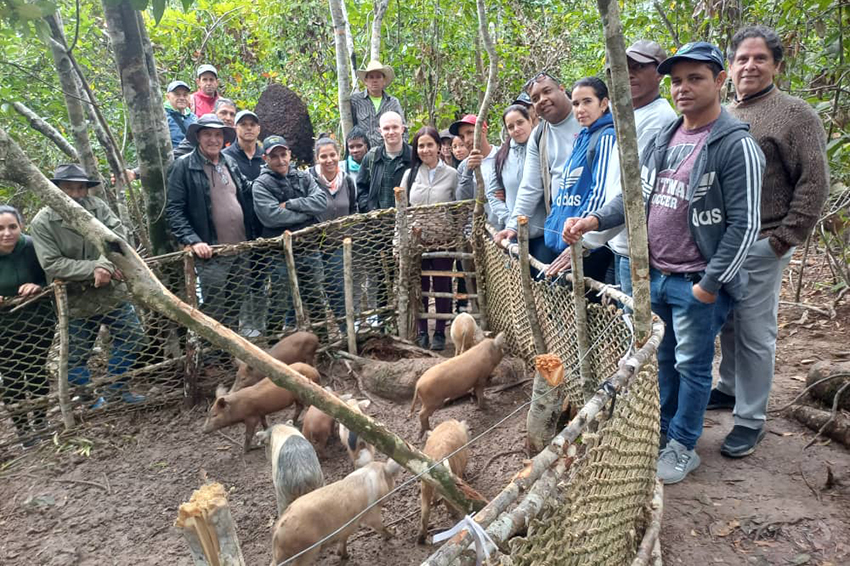
In the municipalities of Viñales and La Palma, the mission met with local authorities, municipal teams, and producers, who acknowledged the relevance of the project in incorporating the climate approach into municipal development strategies. Visits to the El Capón farm, in Viñales, and La Carmelina, in La Palma, made it possible to observe natural and extensive systems for raising Creole pigs, integrated into mixed vegetation ecosystems and based on the sustainable use of forest resources. Local producers, beneficiaries, actively participated in the exchanges, sharing experiences and results.
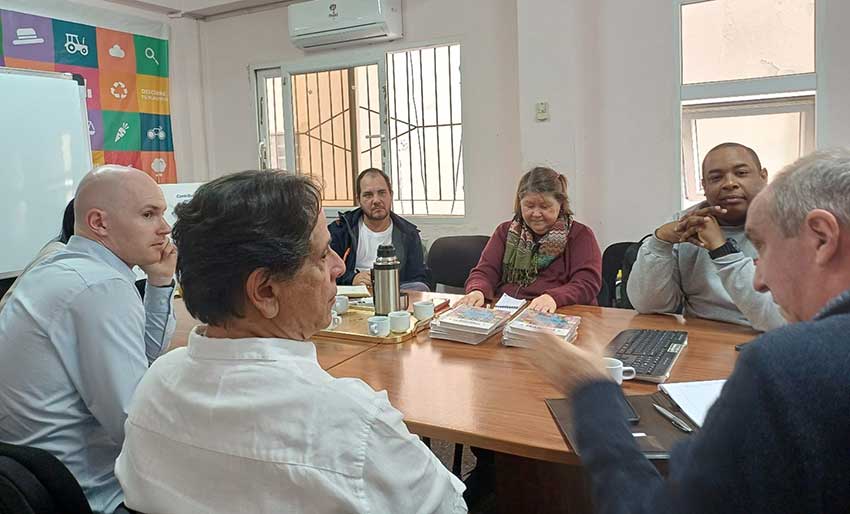
The visit concluded in Havana with a meeting at the Center for Local and Community Development (CEDEL), part of CITMA. In this space, Dr.C. Ada Guzón, director of the institution, presented the center’s main lines of work, while Dr.C. Dariel de León, coordinator of the Municipal Climate Governance component, presented the actions implemented to integrate this axis into local development strategies, consolidating the sustainability and climate resilience approach promoted by CIENPINOS.
More information:
Dra.C. Tania Sánchez Santana
National Director of the CIENPINOS Project
tania@ihatuey.cu
Dr.C. Ismael Hernández Venereo
International Coordinator of the CIENPINOS Project
CATIE
isamel.hernandez@catie.ac.cr
Written by::
M.Sc. Nayda Armengol López
Coordinator, Communications Component
CIENPINOS Project
nayda@ihatuey.cu
Tag:Agroforestry, ciencia, CIENPINOS, Cuba, gobernanza