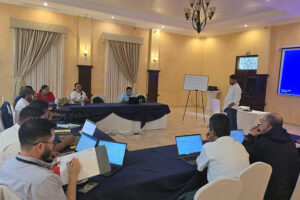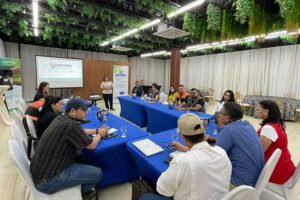
Visit of CATIE’s Director General to Honduras opens cooperation opportunities in sustainable agriculture, forest restoration, and low-emission livestock
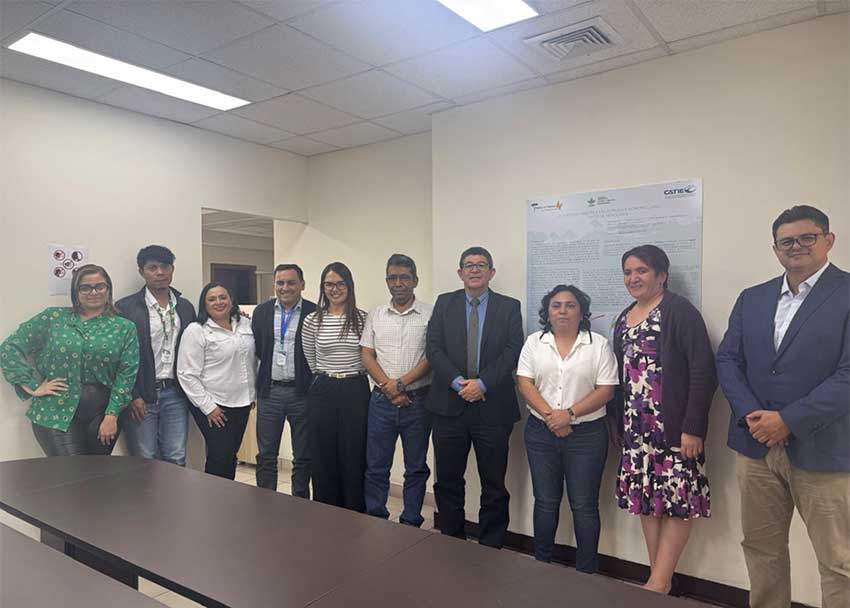
- Institutional initiative contributes to strengthening work in the country and to generating cooperation models that can be replicated in other territories of Latin America and the Caribbean.
A working agenda carried out in Honduras by Dr. Luis Pocasangre, Director General of CATIE (Tropical Agricultural Research and Higher Education Center), made it possible to identify new opportunities for cooperation with authorities from the country’s agricultural, environmental, and forestry sectors in strategic areas such as sustainable agriculture, forest restoration, low-emission livestock, as well as coffee, cacao, and the training of specialized human talent.
During the visit, held from February 26 to 28, meetings were held with representatives of the Honduran government and international organizations to explore new partnerships aimed at strengthening applied research, climate action, and agricultural innovation in the region.
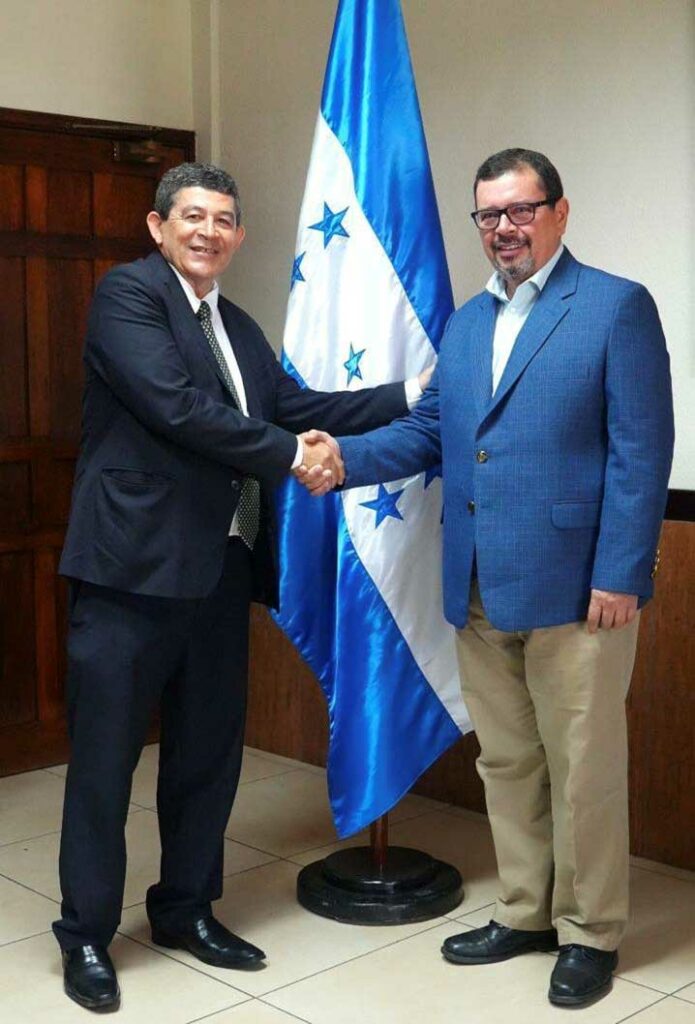
In a meeting with the Minister of Agriculture of Honduras, Moisés Molina, opportunities were discussed to boost agricultural research in the country and expand cooperation with CATIE in strategic areas such as coffee, cacao, and resilient production systems.
The Minister also expressed interest in strengthening the training of Honduran professionals at CATIE’s Graduate School, highlighting the importance of developing technical capacities to address the challenges facing the agricultural sector.
Likewise, possibilities for collaboration were discussed in initiatives related to climate financing and multilateral cooperation, including projects associated with the Central American Bank for Economic Integration, the Inter-American Development Bank, and the World Bank.
Sustainable livestock and forest restoration
During the meeting with the Minister of Environment of Honduras, Juan Carlos Ramos, progress and opportunities related to projects promoting nature-based solutions and low-emission livestock were analyzed.
Discussions included CATIE’s work in forest and landscape restoration, as well as initiatives to strengthen the sustainability of the livestock sector through production practices that contribute to reducing emissions and improving climate resilience.
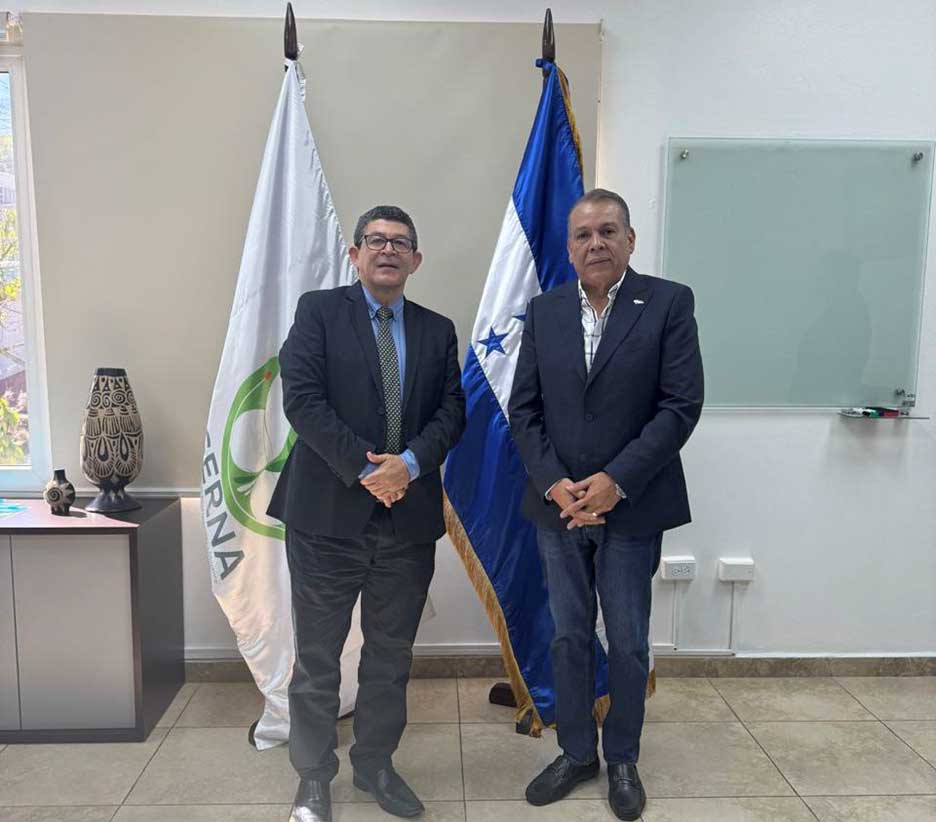
Articulation with the forestry and livestock sectors
The agenda also included meetings with the Vice Minister of Livestock, Justo Martínez, a CATIE graduate, who highlighted the value of strengthening initiatives that promote sustainable livestock production and capacity development in the sector.
Likewise, in a meeting with the Executive Director of the Forest Conservation Institute (ICF), opportunities for cooperation were explored in forest restoration, agroforestry, and professional training in sustainable forest management.
Among the areas of interest, strengthening technical capacities through diploma programs and training initiatives for forestry sector professionals was also highlighted.
Regional cooperation with strategic partners
As part of the visit, CATIE’s Director General also met with the representative in Honduras of the Inter-American Institute for Cooperation on Agriculture (IICA), with whom opportunities were discussed to promote joint research and development projects, leveraging the complementarity between both organizations.
The mission also included a visit to CATIE’s National Office in Honduras, from where regional projects focused on sustainable agriculture, ecosystem restoration, and climate resilience are coordinated.
These initiatives contribute to strengthening the Center’s work in the country and to generating cooperation models that can be replicated in other territories of Latin America and the Caribbean.
Written by:
Esteban Rodríguez Zamora
Communicator
Information Technology and Communication
CATIE
esteban.rodriguez@catie.ac.cr