Shared Leadership: The Story of AMUPROCAJ and Its Efforts to Link Gender Equity and Climate Resilience Together with the ESCALAR Project
- ESCALAR presents the second of four life stories that demonstrate how climate adaptation and gender mainstreaming go hand in hand across the territories of the Trifinio Central American Dry Corridor.
The ESCALAR project: Scaling climate change adaptation solutions for resilience and migration reduction in the Central American Dry Corridor, promotes the mainstreaming of a gender approach in rural territories. Through technical assistance, influence on policy frameworks, strengthening of rural associative enterprises, and climate financing, the project is working comprehensively to reduce the gender gaps prioritized in its Gender Strategy.
With this series of stories collected throughout 2025, ESCALAR presents experiences showing how women are expanding their participation in climate adaptation processes and positioning their contributions in the fight against climate change.
The Story of AMUPROCAJ
“One becomes accustomed to being machista, and sometimes we see women as a little less, so I’ve liked the gender trainings because now I no longer think I’m above women.” (Isaías Díaz, AMUPROCAJ associate)
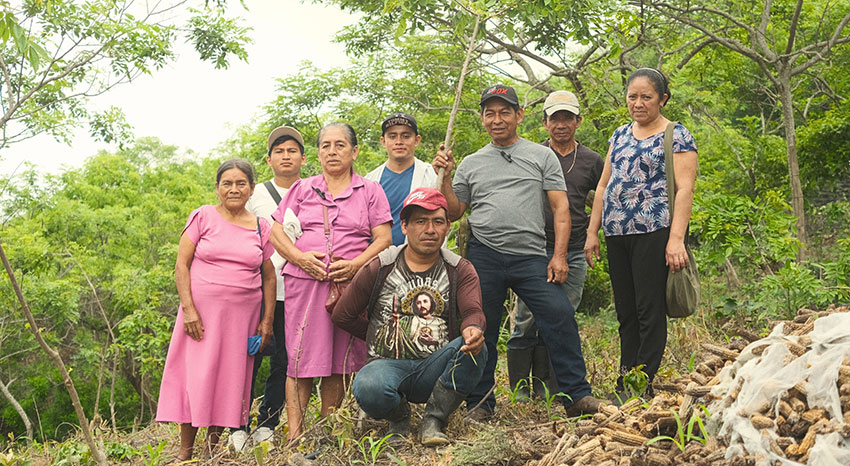
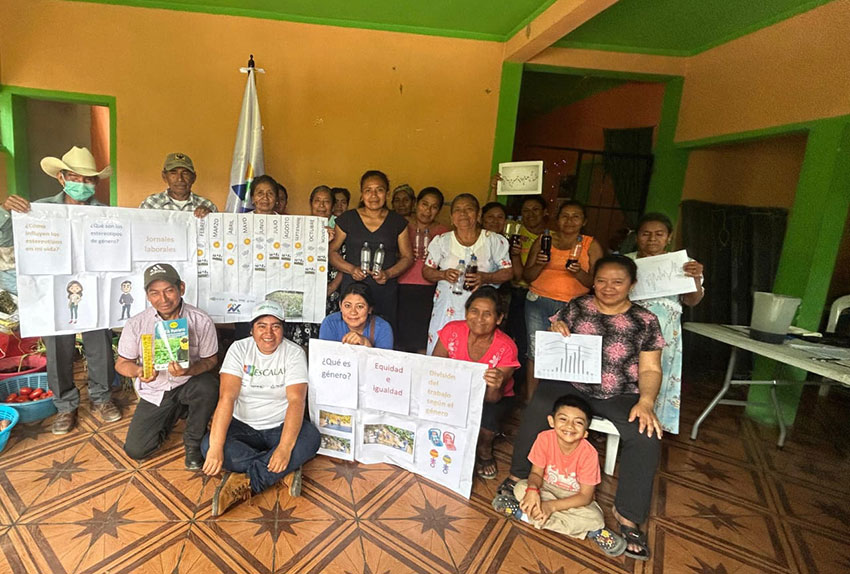
The Association of Progressive Women of Plan del Jocote in the village of Maraxcó (AMUPROCAJ), located in the municipality of Chiquimula, Guatemala, joined the ESCALAR project in 2024. Since then, the collaboration has benefited 50 people through two CSAIs: the Kuxur Rum system and Zamorano tanks.
Although some of its members were already familiar with the benefits of the Kuxur Rum system and had worked with it before, the distances between plots are quite large. Therefore, with the arrival of ESCALAR, they began receiving training on a single learning farm set up by Gloria Díaz, the organization’s president. Additionally, two subgroups have been formed based on proximity, to ensure that the field technician can provide close follow-up to everyone adopting these CSAIs, and that those with more experience can support newcomers.
The group explains that while the support with inputs and seeds has represented significant savings for families, the learning acquired around issues such as not burning waste; producing organic fertilizer by covering the soil with madre de cacao leaves; and using adequate planting distances to ensure proper shade management has been fundamental in their process.
Additionally, the implementation of Zamorano tanks has helped them irrigate crops grown in parallel.
“Now the water is no longer wasted; we store it. The tank doesn’t last the entire dry season, but it’s already a great help,” says Dilia Gallardo, one of the associates. She also explains that before having the tank, water availability on the farm depended on carrying baskets filled with water bags from their homes.
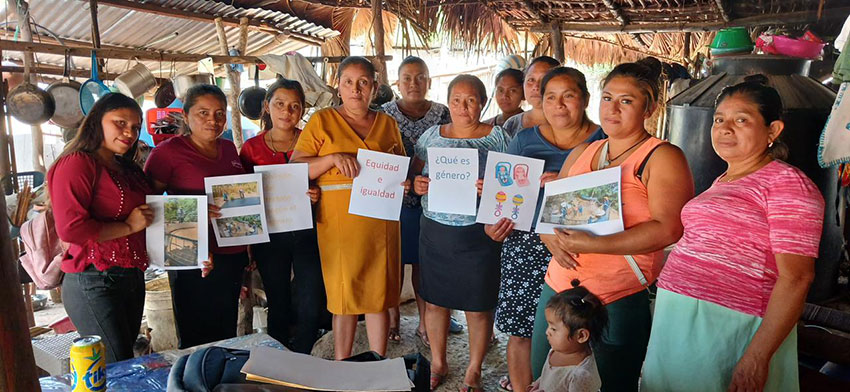
Members of the association mention that the work has brought many parallel learnings related to gender. For women, for example, taking on activities traditionally carried out by men has helped them feel more integrated when putting into practice the knowledge gained in the trainings. And for men, seeing women in active roles leads them to value the work women do both inside and outside the farm.
“I admire the work of women because they work hard. They get up before we do and go to bed last, taking care of the chickens, taking the kids to school—it’s big work. And late at night, they keep doing chores. We go to sleep and she keeps washing the dishes,” Isaías adds. comenta Isaías.
Looking ahead, members of the association hope that these efforts to promote the role of women and implement the CSAIs will result in higher crop yields thanks to collaborative work, improved soil quality, and the opportunity to generate extra income through the sale of madre de cacao wood.
About the Series
This is the second story in the series produced by ESCALAR. If you would like to read the first story in the series, visit From Drought to Resilience: Lesly’s Story and the First Zamorano Tank Built by ESCALAR in La Labor, Ocotepeque, Honduras – CATIE..
To access the ESCALAR project’s Gender Strategy, visit this link.
More information/written by:
Fernanda Carrillo Chacón
Gender, equity and human rights specialist in rural areas
ESCALAR Project – CATIE
fernanda.carrillo@catie.ac.cr