From Drought to Organic Production: ESCALAR–CATIE’s Support to the HOSAGUA Women’s Network in Metapán, El Salvador
- ESCALAR presents the third of four life stories demonstrating that integrating climate adaptation and gender approaches in the territories of the Trifinio Central American Dry Corridor go hand in hand.
The ESCALAR Project— Scaling Climate Change Adaptation Solutions for Resilience and Reduced Migration in the Central American Dry Corridor —promotes the mainstreaming of the gender approach in rural territories. Through technical assistance, policy advocacy, strengthening rural associative enterprises, and climate financing, the project is working comprehensively to reduce gender gaps prioritized in its Gender Strategy.
With this series of stories collected throughout 2025, ESCALAR presents experiences showing how women are expanding their participation in climate adaptation processes and positioning their contributions in the fight against climate change.
The Story of HOSAGUA
“Now that we know how things are done and what they are for, it has caught our attention and motivated us to work with them. Today, in our garden, we no longer use other types of products—only organic ones. It is different from what we had learned; we are producing our own organic inputs.” (Guadalupe Ladino, HOSAGUA member). (Guadalupe Ladino, asociada de HOSAGUA).
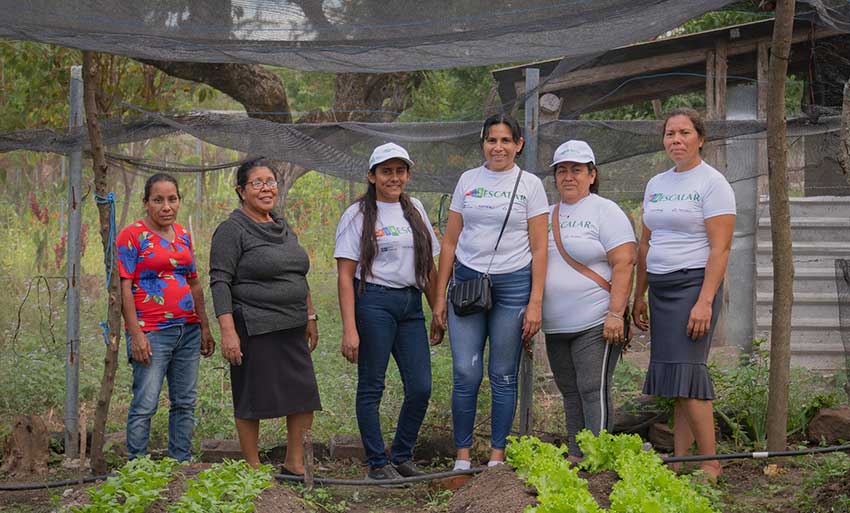
The HOSAGUA Trifinio Women’s Network began its chapter in El Salvador in 2020 as a mechanism to obtain legal backing to develop projects in the communities. By 2025, its membership has grown to a total of 600 members—all women.
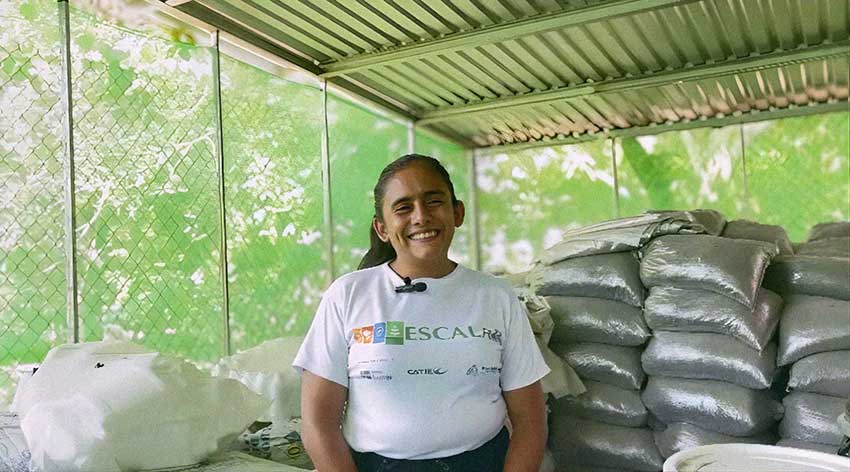
Doris, for example, began her journey together with her sister. They participated in ESCALAR JUVENTUD 2023, where they designed a bio-inputs venture and received seed capital to bring it to life. The implementation of this project has created job opportunities for other members of the Network, and the product has been used to organically fertilize community gardens.
Now, Doris is also part of the field technical team. After taking on this role, she has received regular training and is now the one providing technical assistance to HOSAGUA families in El Salvador—something members value due to the closeness and trust she provides when addressing questions.
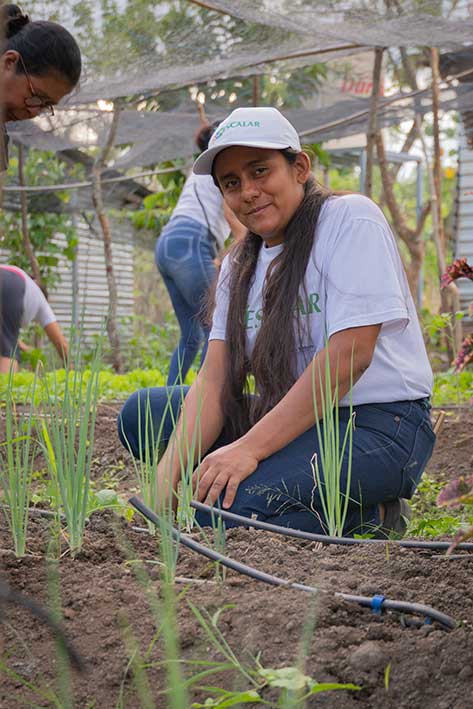
Since 2023, ESCALAR has implemented two of its IApA components: 18 Zamorano tanks and Kuxur Rum systems. These have benefited 30 families from the communities of El Llano and Las Pavas in Metapán, and Chilamate in Santiago de la Frontera.
“It is very dry here. If it rains for two days in a row, we all flood; but when it doesn’t rain, this is dry (…) The drought and the rainy season are both very harsh,” says Betty Galdámez.
The Zamorano tanks have helped maintain irrigation during drought seasons, allowing women to continue generating income from the sale of their vegetables even under adverse climatic conditions. Additionally, through the Kuxur Rum system, they have been able to protect their crops from climate extremes and continue supplying their families.
The members highlight that ESCALAR was the first project to enter the territory and that, thanks to the technical assistance and capacity strengthening, they have been able to access new partnerships with other institutions working in agricultural and rural areas.
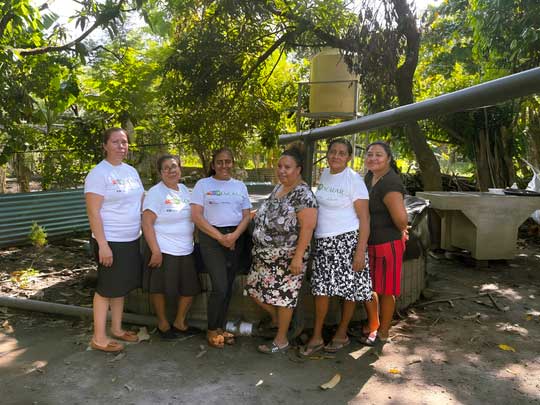
This has allowed them to take on various roles in those projects and contributed to economic empowerment: they have incorporated savings groups to capitalize their earnings and reinvest in their territory. In the near future, they plan to build agroforestry nurseries that can be irrigated with water collected from the Zamorano tanks and treated with the bio-inputs they already produce.
“I want to tell women that if you ever have the opportunity to join a project, do it—don’t be afraid. Go to the meetings because that is where we get involved and grow in all of this,” concluded Esperanza Pérez.
About the Series
This is the third story in the series produced by ESCALAR. To read previous publications, visit From Drought to Resilience: Lesly’s Story and the First Zamorano Tank Built by ESCALAR in La Labor, Ocotepeque, Honduras – CATIE. and Shared Leadership: The Story of AMUPROCAJ and Its Efforts to Link Gender Equity and Climate Resilience with the ESCALAR Project – CATIE..
To access the ESCALAR project’s Gender Strategy, visit visit this link here.
More information/written by:
Fernanda Carrillo Chacón
Gender, equity and human rights specialist in rural areas
ESCALAR Project – CATIE
fernanda.carrillo@catie.ac.cr