• About CATIE
    • Our Essence
    • Mission, vision and values
    • Strategic Vision
    • Authorities
    • Strategic alliances and projects
    • Institutional transparency
    • CATIE Campus: A Space for Restoration
  • Research for development
  • Education
    • Oferta Académica
    • Capacitación continua
    • Graduate School
    • Financing
    • Virtual Campus
    • Online payment
  • Our commercial offer
    • Commercial Farm
    • Botanical Garden
    • Forest Seed Bank
    • Biotechnology Laboratory
    • CATIE Specialty Coffee
    • Accommodation at CATIE
    • “Repurpose with purpose”
  • CATIE in the region
    • Belize
    • Bolivia
    • Colombia
    • Costa Rica
    • Ecuador
    • El Salvador
    • Guatemala
    • Haiti
    • Honduras
    • Mexico
    • Nicaragua
    • Panama
    • Peru
    • Dominican Republic
    Have any question?
    (00) 123 456 789
    hello@eduma.com
    • Spanish
    • CATIE in press
    • Library Services
    • Employment
    • Licitaciones

    CATIE
    • About CATIE
      • Our Essence
      • Mission, vision and values
      • Strategic Vision
      • Authorities
      • Strategic alliances and projects
      • Institutional transparency
      • CATIE Campus: A Space for Restoration
    • Research for development
    • Education
      • Oferta Académica
      • Capacitación continua
      • Graduate School
      • Financing
      • Virtual Campus
      • Online payment
    • Our commercial offer
      • Commercial Farm
      • Botanical Garden
      • Forest Seed Bank
      • Biotechnology Laboratory
      • CATIE Specialty Coffee
      • Accommodation at CATIE
      • “Repurpose with purpose”
    • CATIE in the region
      • Belize
      • Bolivia
      • Colombia
      • Costa Rica
      • Ecuador
      • El Salvador
      • Guatemala
      • Haiti
      • Honduras
      • Mexico
      • Nicaragua
      • Panama
      • Peru
      • Dominican Republic

      News

      • Home
      • Blog
      • News
      • Multisectoral dialogue drives roadmap to reduce pesticide use in Costa Rican coffee
      Multisectoral dialogue drives roadmap to reduce pesticide use in Costa Rican coffee

      • Posted by Karla Madrigal P.
      • Categories News
      • Date 22 April, 2026
      • More than 40 stakeholders from the coffee sector build a shared vision for Los Santos to become a regional benchmark in regenerative coffee farming by 2040.

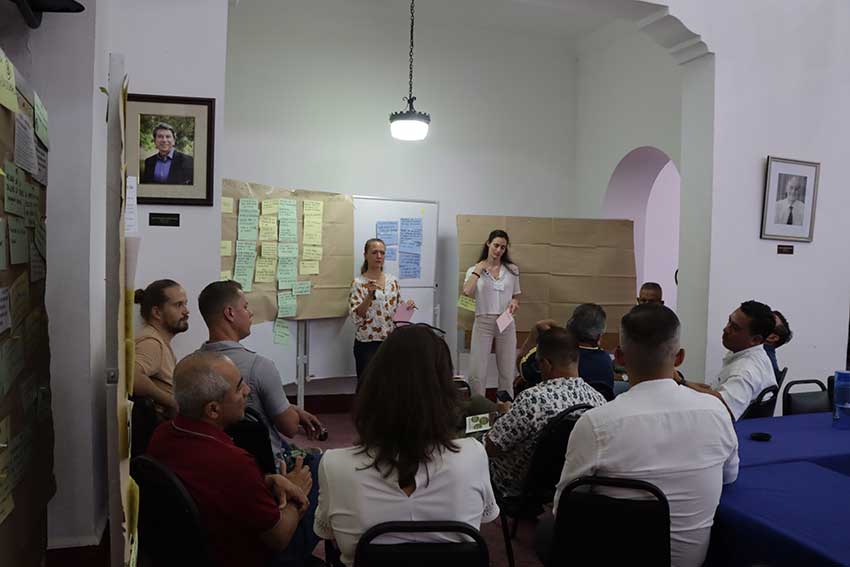
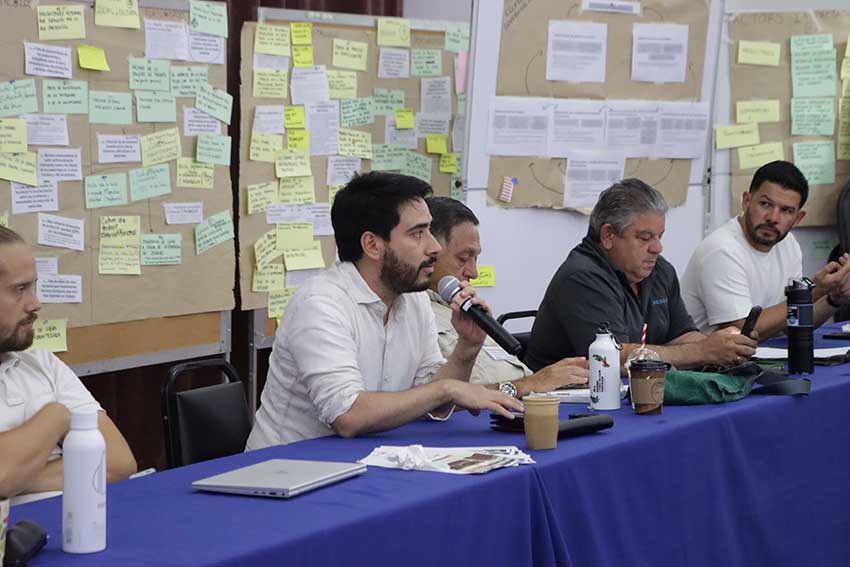
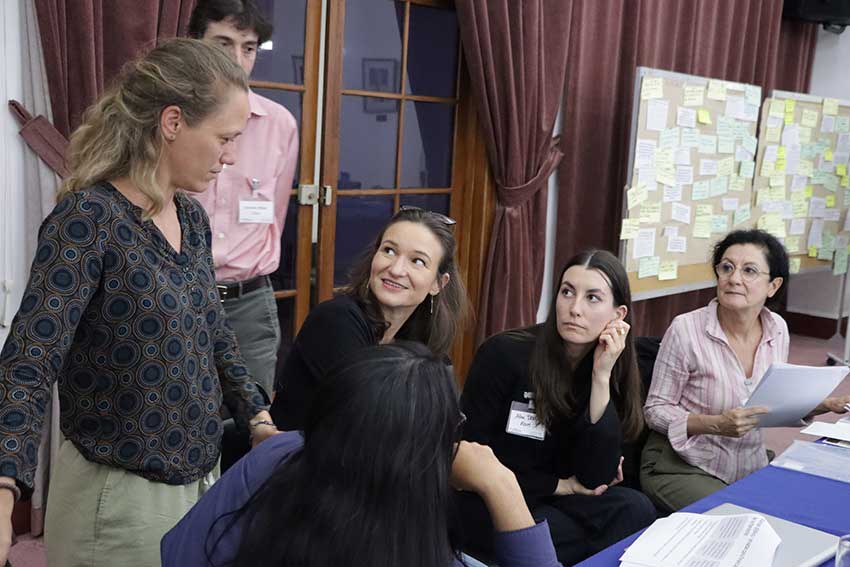
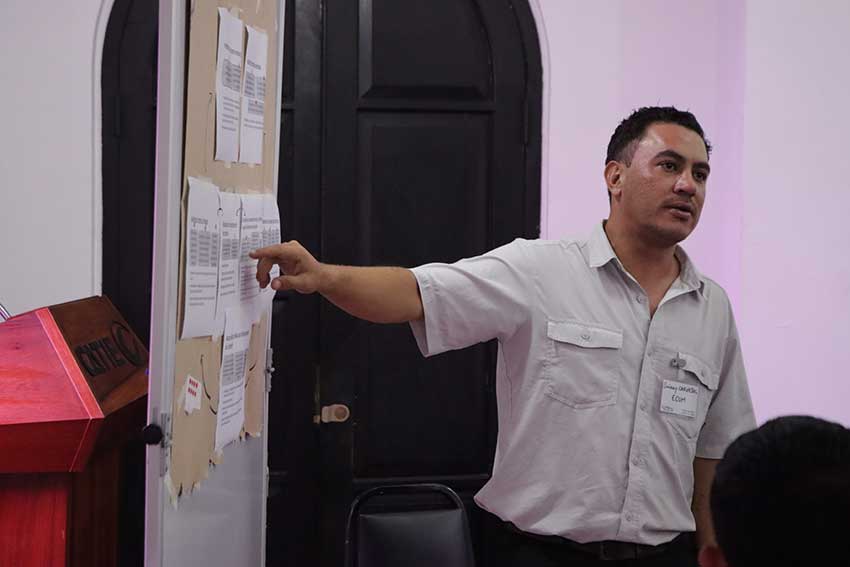
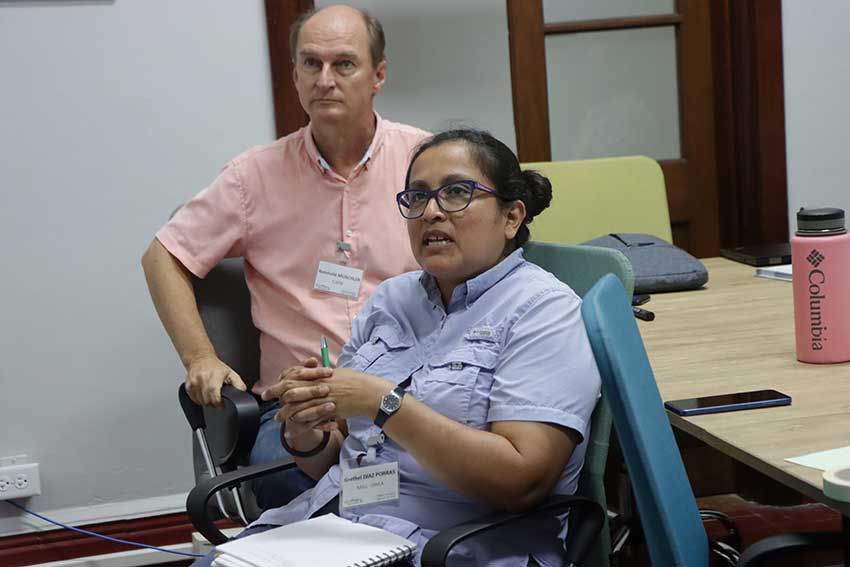
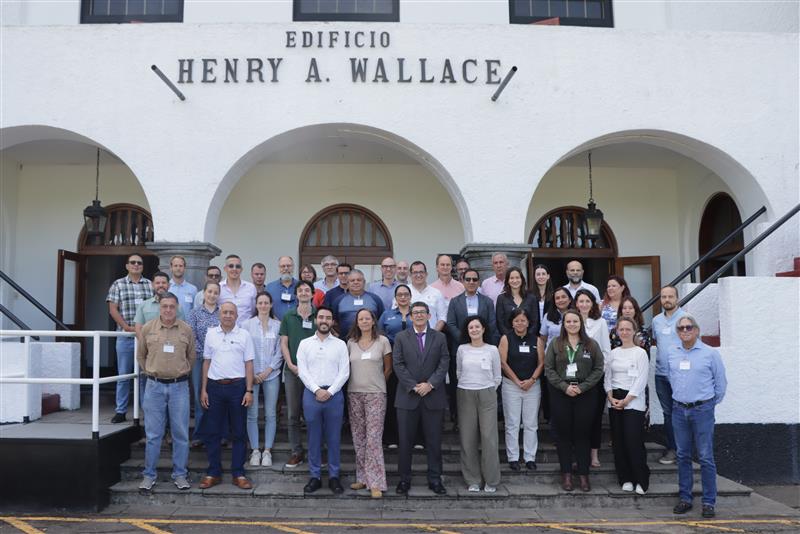
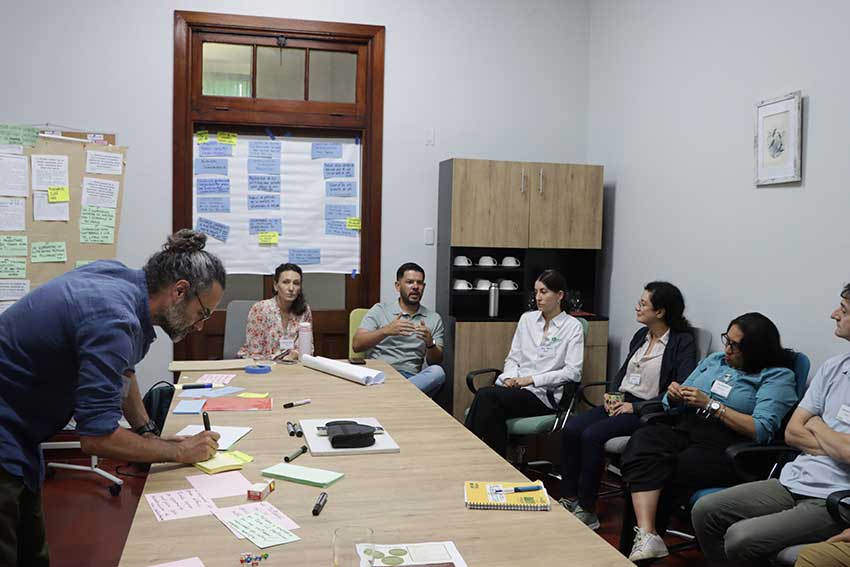
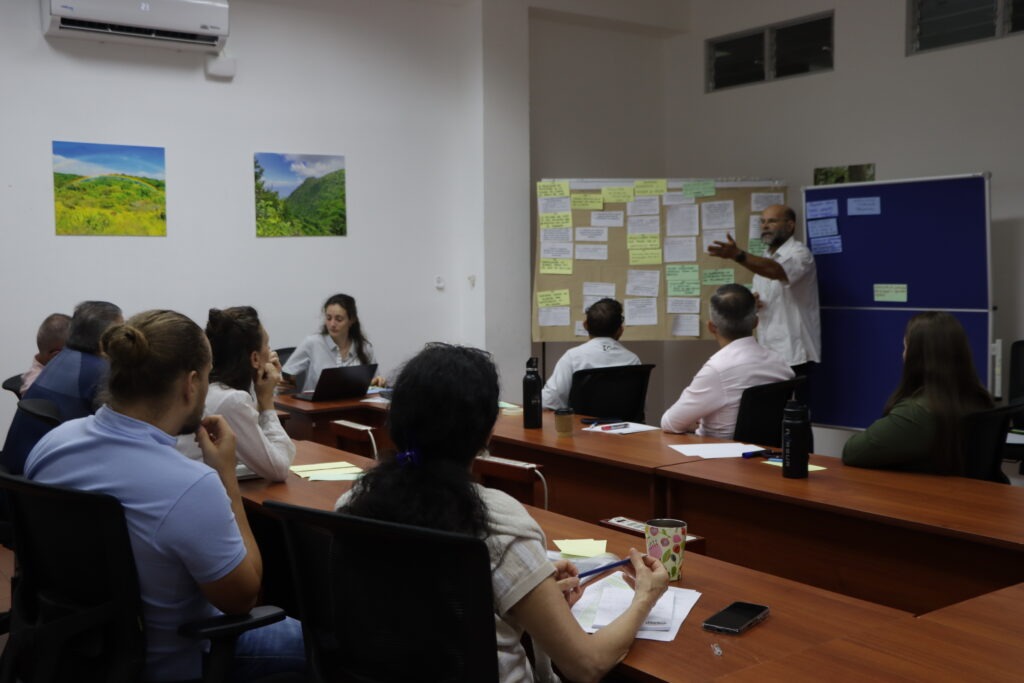
      Coffee cultivation in Costa Rica took an important step toward sustainability with the implementation of a participatory workshop held from April 14 to 16, 2026, which brought together more than 40 representatives from 20 public, private, academic and international cooperation institutions. The initiative, promoted by ECOFFEE R&D and its National Dialogue Platform, took place at CATIE (Tropical Agricultural Research and Higher Education Center) with the aim of jointly developing strategies to reduce pesticide use in the Los Santos region.
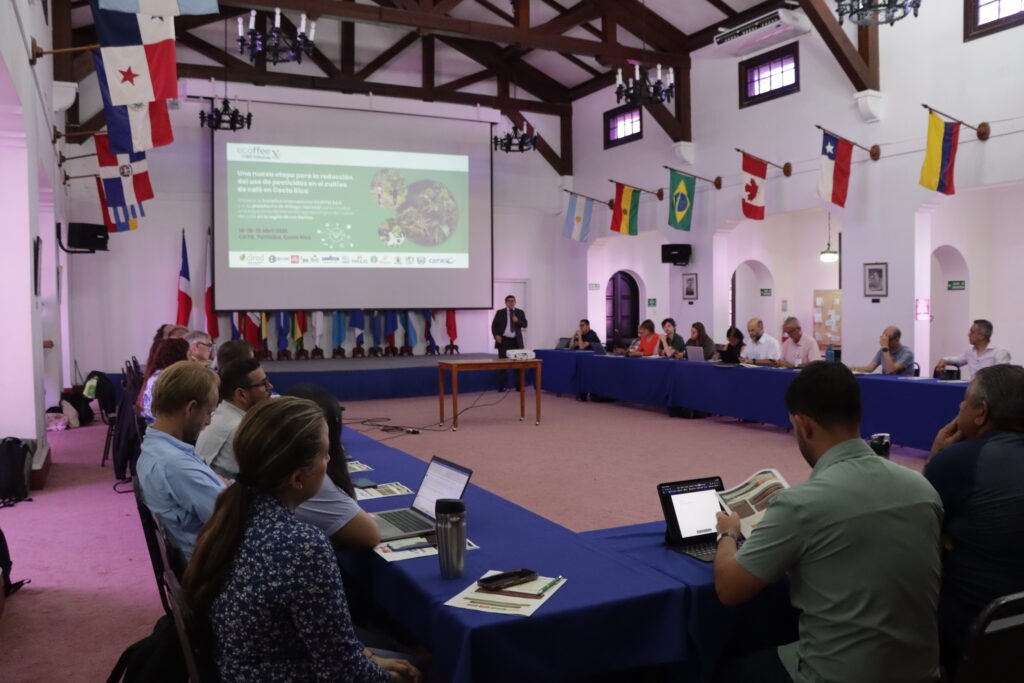
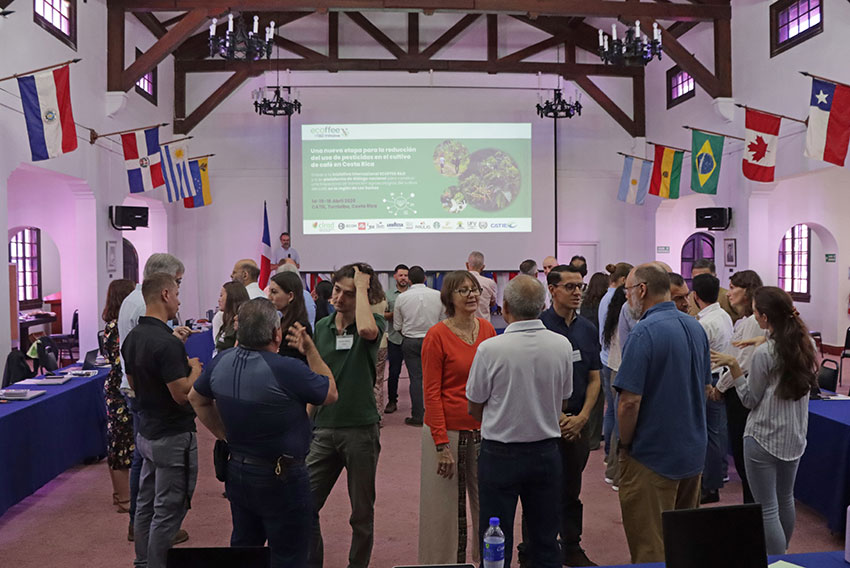
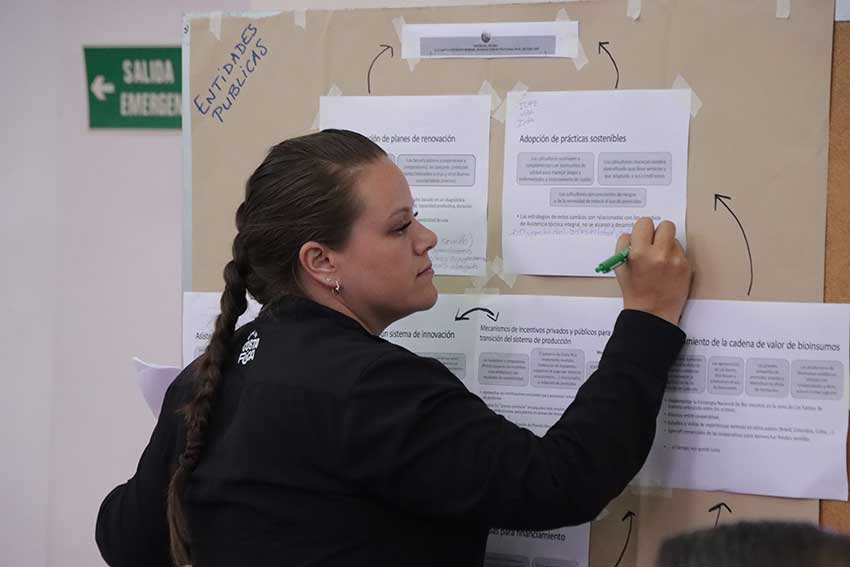
      Over three days of work, the workshop facilitated an open and constructive dialogue among key stakeholders in the coffee sector, who analyzed the main challenges, opportunities and conditions required to promote an agroecological transition in coffee production. The process made it possible to identify “levers of change” and lay the groundwork for a pilot project aimed at positioning Los Santos as a showcase for sustainability.

      One of the main achievements was the collective construction of a shared vision: to reduce pesticide use by 50% through the implementation of good agricultural practices, shade management and the use of bio-inputs, without compromising producers’ profitability.
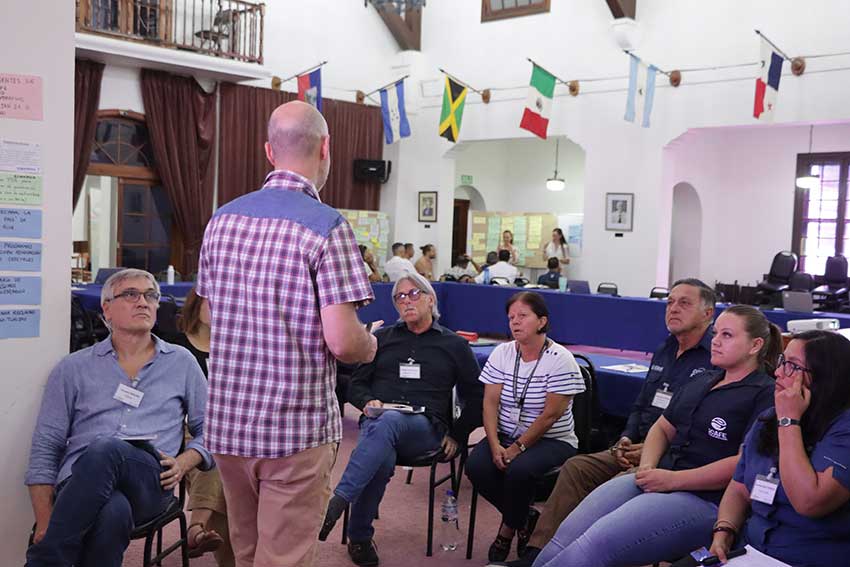

      In addition, progress was made in the formulation of a theory of change to guide long-term collaborative work. This roadmap proposes that, by 2040, the Los Santos region can consolidate itself as a regional benchmark in regenerative coffee farming.

      “Participation in this second ECOFFEE workshop is extremely important. It has allowed us to meet other stakeholders in person and, by working together, we will achieve our goals much faster, while also building more sustainable relationships over time,” said Gina Canales, Manager at JDE Peet’s.

      Fernando Naranjo, President of the Board of Directors of ICAFE and a producer from the Los Santos region, highlighted the value of collective learning: “Twenty years ago, I was involved in organic agriculture, but I did not have the training I am receiving now. It is very motivating to see how new generations are taking up producers’ experience in regenerative agriculture; the farm becomes an open-air academic classroom.”

      The workshop was characterized by a high diversity of stakeholders and active, respectful participation oriented toward joint construction. Through participatory methodologies, technical, economic, sociocultural and policy dimensions were analyzed, as well as the obstacles and opportunities for advancing toward more sustainable production systems.
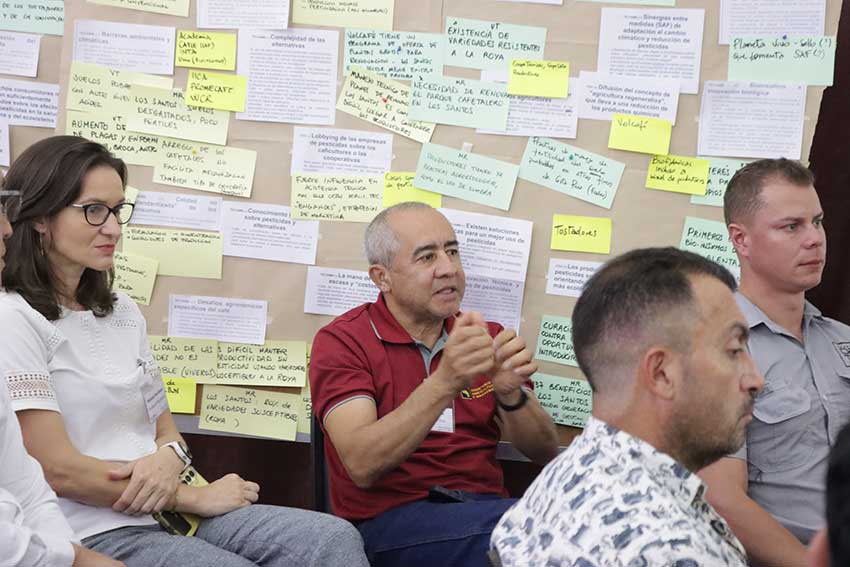
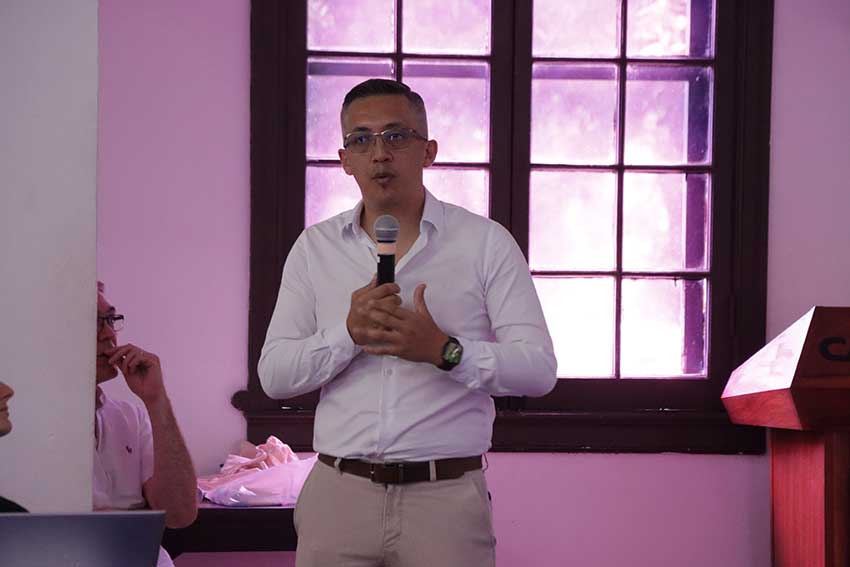
      Among the participating organizations are private companies such as Lavazza Group, ECOM Corp., including its subsidiary ECOM-SMS, JDE Peet’s and Volcafé; public institutions such as the Ministry of Agriculture and Livestock (MAG), the State Phytosanitary Service (SFE), the Costa Rican Coffee Institute (ICAFE), and the National Institute for Innovation and Transfer in Agricultural Technology (INTA); international organizations such as the European Union, the Inter-American Institute for Cooperation on Agriculture (IICA), the regional platform PROMECAFE, the United Nations Development Programme (UNDP), and the French Development Agency/Expertise France; certification bodies such as Rainforest Alliance; cooperatives such as CoopeTarrazú and CoopeDota; the bioinputs company Soluciones Agrícolas; as well as academic institutions such as CATIE, the University of Costa Rica (Atlantic Campus), and CIRAD, among others.

      The results obtained establish a solid foundation for moving forward with the next steps, which include the design and implementation of concrete actions between 2026 and 2027. This collaborative process seeks not only to transform coffee farming in Los Santos, but also to generate replicable lessons for other coffee-growing regions in the country. 


      More information:

      Clément RIGAL
      Executive Secretariat of the ECOFFEE Consortium
      CIRAD-CATIE
      clement.rigal@cirad.fr

      Written by:

      Karla Madrigal
      Communicator
      Communications and Marketing Office
      Karla.madrigal@catie.ac.cr

      Tag:regenerative coffee farming, pesticide reduction, agricultural sustainability

      • Share:
      Karla Madrigal P.

      Previous post

      Facilitators promote sustainable livestock farming through the use of drones in Honduras
      22 April, 2026

      Next post

      CATIE advances its technical update series in data analysis for tropical agricultural research
      22 April, 2026

      You may also like

      aprendiendo-1
      From learning to teaching: Esmeralda Ramos shares her agroecological experience in El Salvador
      16 October, 2026
      conservar-bosques-1
      Conserving forests and restoring lagoons to prevent conflicts in Honduras
      14 October, 2026
      restaurar-paisajes-1
      Landscape restoration can also prevent conflicts: Six countries share experiences in Guatemala
      13 October, 2026

      Search

      Categories

      • CATIE IN PRESS
      • EMPLOYMENT
      • Events
      • News
      • Noticias Guatemala
      • Noticias institucionales
      • Noticias Posgrado

      CATIE IN PRESS


      (506) 2558-2000


      comunica@catie.ac.cr


      Facebook-f


      Twitter


      Instagram


      Wikipedia-w


      Linkedin-in


      Youtube

      Suscribe

      Política de Protección de Datos y Privacidad

      • Sitemap
      • Contact
      Utilizamos cookies con el fin de ofrecer, mejorar, proteger y promocionar nuestros servicios.Al hacer clic en "Aceptar todo", acepta el uso de TODAS las cookies. Sin embargo, puede visitar Configuración de Cookies para proporcionar un consentimiento controlado.
      RechazarAceptar todo
      Manage consent

      Privacy Overview

      Este sitio web utiliza cookies para mejorar su experiencia mientras navega por el sitio web. De estas, las cookies que se clasifican como necesarias se almacenan en su navegador, ya que son esenciales para el funcionamiento de las funcionalidades básicas del sitio web. También utilizamos cookies de terceros que nos ayudan a analizar y comprender cómo utiliza este sitio web. Estas cookies se almacenarán en su navegador solo con su consentimiento. También tiene la opción de optar por no recibir estas cookies. Pero la exclusión voluntaria de algunas de estas cookies puede afectar su experiencia de navegación.
      Necessary
      Always Enabled
      Necessary cookies are absolutely essential for the website to function properly. These cookies ensure basic functionalities and security features of the website, anonymously.
      Functional
      Functional cookies help to perform certain functionalities like sharing the content of the website on social media platforms, collect feedbacks, and other third-party features.
      Performance
      Performance cookies are used to understand and analyze the key performance indexes of the website which helps in delivering a better user experience for the visitors.
      Analytics
      Analytical cookies are used to understand how visitors interact with the website. These cookies help provide information on metrics the number of visitors, bounce rate, traffic source, etc.
      Advertisement
      Advertisement cookies are used to provide visitors with relevant ads and marketing campaigns. These cookies track visitors across websites and collect information to provide customized ads.
      Others
      Other uncategorized cookies are those that are being analyzed and have not been classified into a category as yet.
      SAVE & ACCEPT