CATIE expands cooperation opportunities in Panama to strengthen climate action and sustainable agriculture
- A high-level agenda carried out in Panama opened new opportunities for cooperation on key issues such as sustainable livestock production, watershed restoration, coffee and cacao, climate migration, and green finance.
During an official visit from February 22 to 25, the Director General of CATIE (Tropical Agricultural Research and Higher Education Center), Dr. Luis Pocasangre, held meetings with government authorities and international organizations that reaffirmed the Center’s role as a strategic partner for the region.

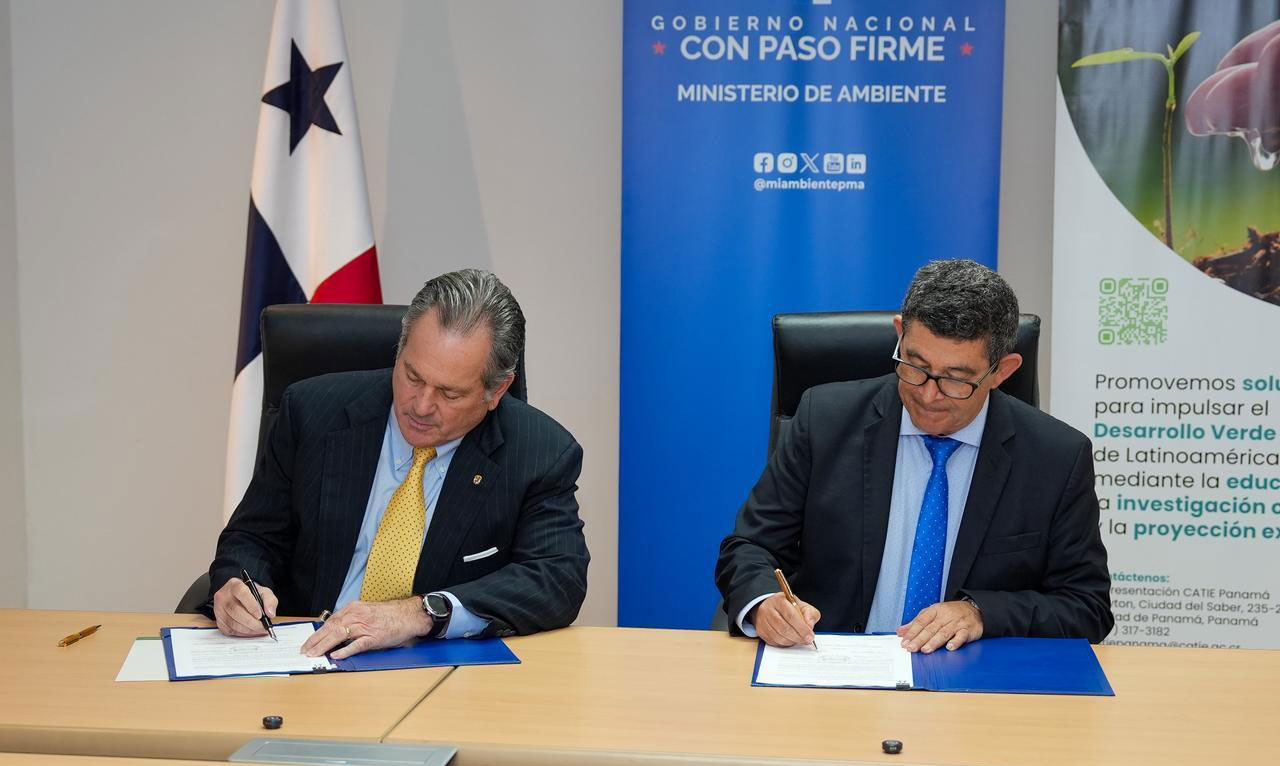
One of the main milestones of the agenda was the signing of a cooperation agreement with the Ministry of Environment of Panama, led by Minister Juan Carlos Navarro.
The agreement strengthens collaboration in applied research and technical training, and opens the door to forming consortia to access resources from the Green Climate Fund and multilateral banks, including the Banco Centroamericano de Integración Económica, the Banco Interamericano de Desarrollo, and the Banco Mundial.
Discussions also advanced around a regional sustainable livestock project, as well as initiatives related to forest restoration, watershed management, climate resilience in agriculture, and the strengthening of agroforestry and silvopastoral systems. Coffee and cacao were identified as strategic value chains for joint work in Panama.
Climate-resilient agriculture and regional cooperation
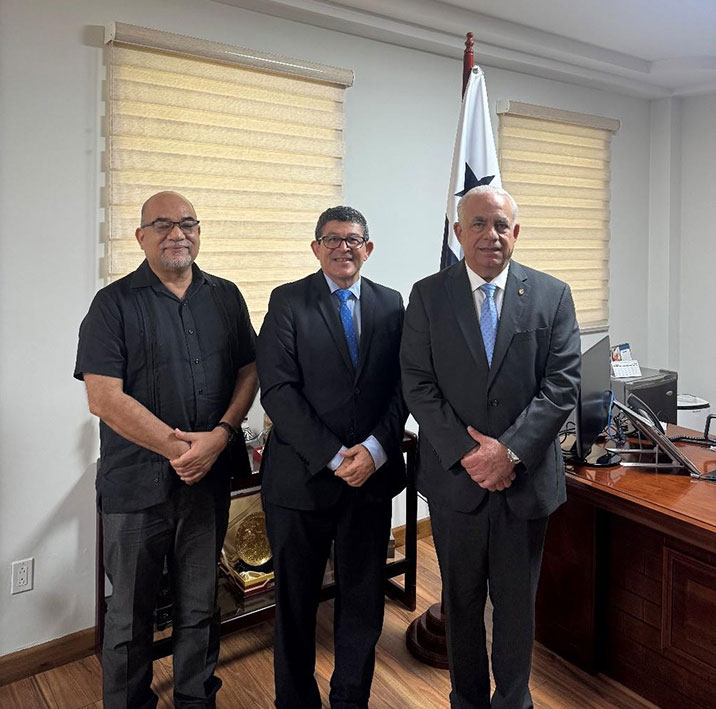
In his meeting with the Minister of Agricultural Development, Roberto Linares, Panama’s interest in working hand in hand with CATIE on regional projects associated with climate finance and sustainable agricultural production was reaffirmed.
The meeting also helped consolidate the institutional relationship and project new actions in applied research and capacity building in climate-resilient agriculture in the face of climate variability.
Synergies with international organizations
The visit also served to deepen dialogue with organizations of the United Nations system and strategic partners in Latin America and the Caribbean.
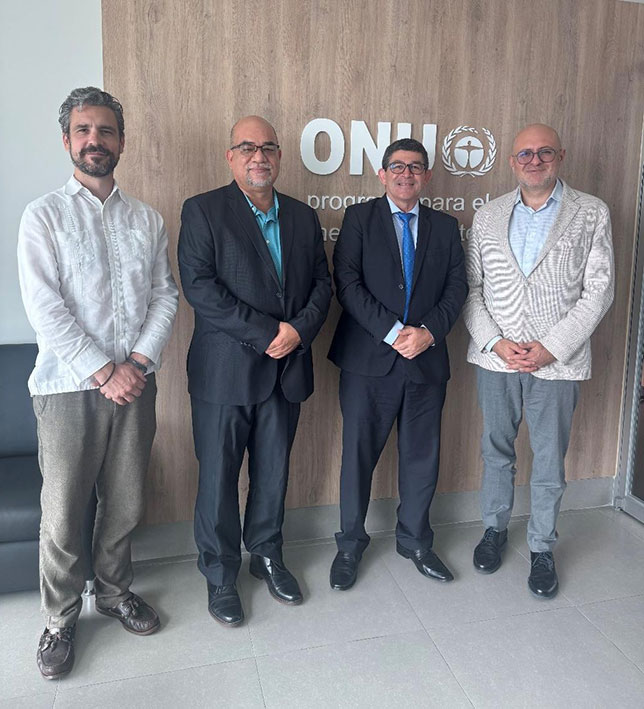
With the United Nations Environment Programme (UNEP), the possibility of formalizing a cooperation agreement and advancing toward a second phase of the PARES project was explored. In addition, it was proposed to systematize its lessons learned for presentation at a side event during COP31 in Antalya, Türkiye.
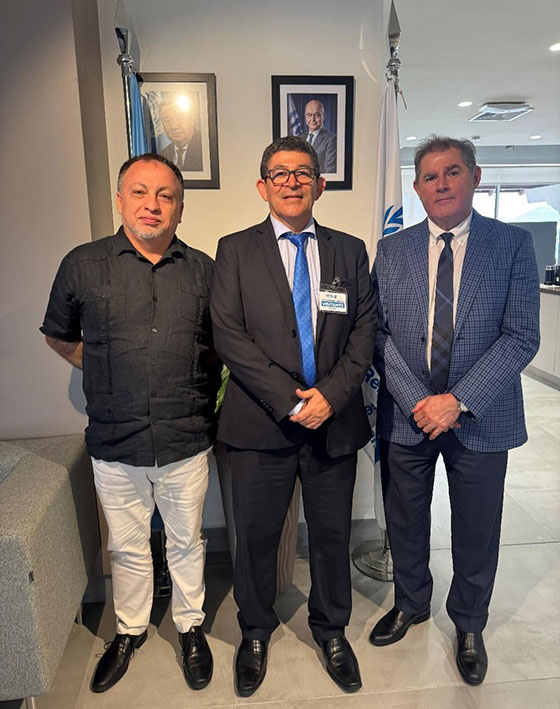
For its part, the United Nations High Commissioner for Refugees (UNHCR) expressed interest in promoting watershed and forest restoration projects linked to climate migration contexts, as well as risk studies in the region.
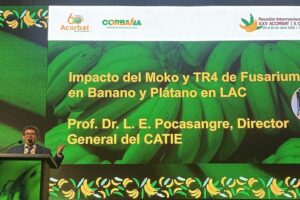
In the meeting with the regional office of the Food and Agriculture Organization of the United Nations (FAO) for Mesoamerica, areas for joint work were identified in the Central American Dry Corridor, low-emission sustainable livestock production, coffee and cacao, as well as in the regional response to Fusarium Race 4 Tropical (TR4) in banana and plantain and the screwworm.
Training and strategic presence in Panama
The agenda also included meetings with the Center for Agricultural Specialties (CEAGRO) to promote academic exchanges and technical residencies at CATIE’s campus in Costa Rica, strengthening the training of young Panamanian professionals.
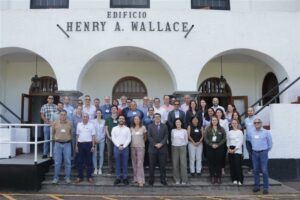
As part of the visit, the role of the CATIE office at Ciudad del Saber in Panama was highlighted, consolidating the institutional presence in the country and facilitating the coordination of projects in priority territories such as Bocas del Toro and Darién.
Through this agenda, CATIE reaffirms its commitment to working alongside governments and international organizations to promote science-based solutions that contribute to climate resilience, productive sustainability, and inclusive development in Latin America and the Caribbean.
More information:
Office of the Director General
dgcatie@catie.ac.cr
Written by::
Esteban Rodríguez Zamora
Communicator
Information Technology and Communication
CATIE
esteban.rodriguez@catie.ac.cr